Why Dolls Matter More Than You Think: Identity, Culture, and Representation
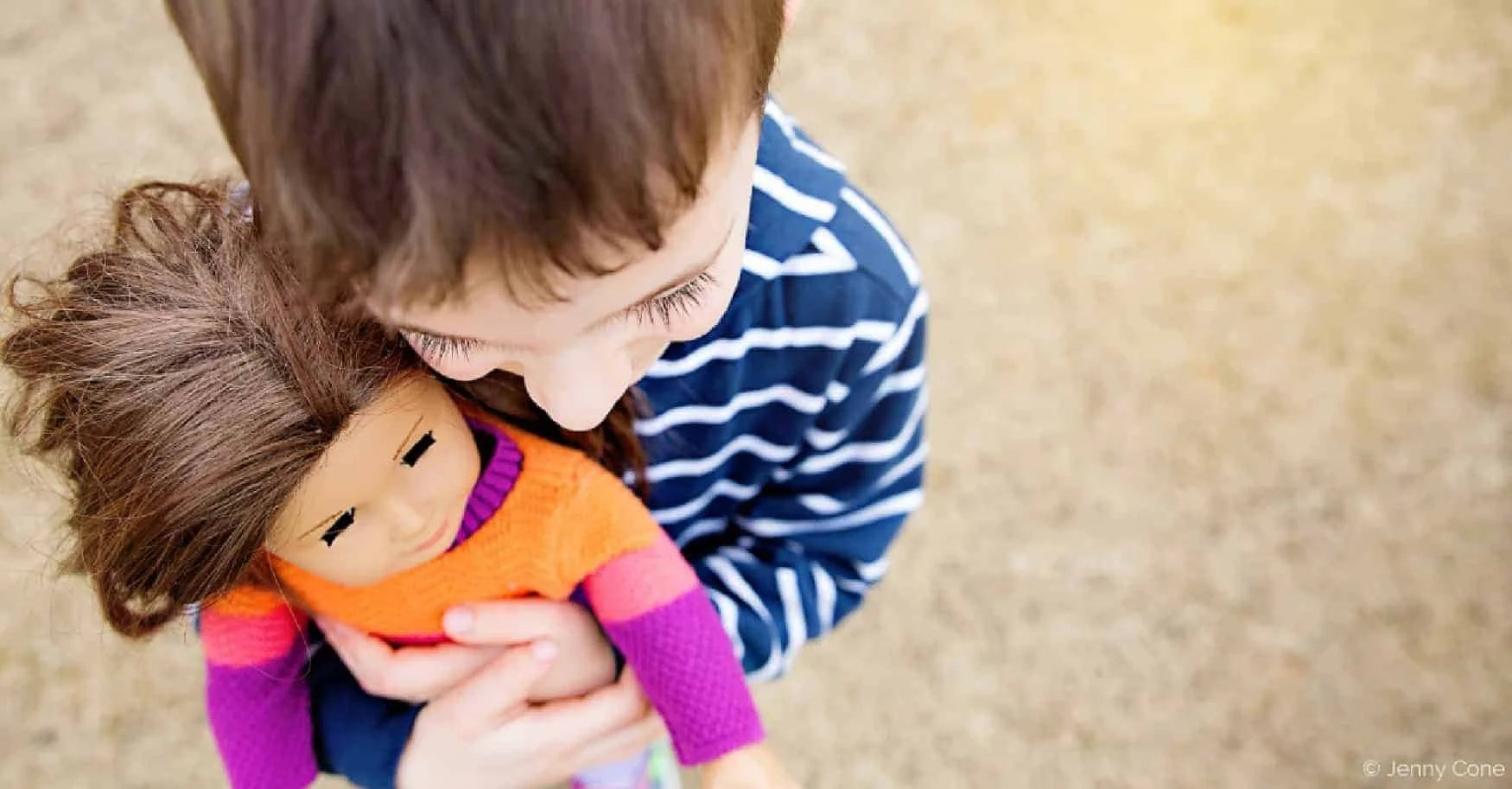
Photo by Jenny Cone at Classroom Clicks
At first glance, dolls can seem deceptively trivial. They are often dismissed as children’s toys, sentimental keepsakes, decorative objects, or relics of nostalgia. People laugh nervously about porcelain dolls in attics or joke about collectors with overfilled shelves.
Yet the speed with which dolls are trivialized often says more about cultural discomfort than about the objects themselves. Few material objects sit so close to the emotional core of human life. Dolls exist at the intersection of childhood, identity, fantasy, beauty, memory, gender, grief, and desire. They are intimate objects, and intimate objects make people uneasy.
As an anthropologist, I have become increasingly interested not simply in dolls themselves, but in why people react so strongly to them. I have watched grown adults soften visibly while talking about a beloved childhood Barbie whose hair they ruined themselves at age six. I have listened to collectors describe replacing a lost doll decades later with the emotional intensity of recovering a missing part of themselves. I have also seen the shame many people carry around dolls, particularly men, who often feel compelled to justify their interest through history, investment, or craftsmanship rather than emotional attachment. Again and again, dolls reveal the hidden emotional architecture of culture.
Anthropologists understand that objects are never just objects. Material things absorb meaning through the social worlds surrounding them. A wedding ring, a family photograph, a church pew, or a child’s blanket all become emotionally charged because they mediate relationships between people, memory, identity, and belief. Dolls function similarly, though perhaps even more intensely because they resemble us. They occupy a strange boundary between object and person. They have faces, bodies, names, clothing, personalities, and projected inner lives. Humans are remarkably willing to animate them emotionally.
This tendency is ancient. Dolls are among the earliest surviving artifacts of human civilization. Long before the modern toy industry existed, humans were already creating miniature human figures for ritual, spiritual, educational, and emotional purposes.
The Venus figurines of prehistoric Europe, ancient Egyptian servant figures placed within tombs, Japanese hina dolls displayed ceremonially, and West African fertility figures all reveal how deeply human societies have invested meaning into constructed bodies. These objects were not understood as mere decorations. They carried cosmological, social, and symbolic power. Through them, societies expressed ideas about fertility, death, kinship, gender, protection, spirituality, and beauty.
What fascinates me most is how consistently dolls become tools for imagining idealized versions of humanity. They rarely represent ordinary bodies neutrally. Instead, dolls tend to encode what a culture values, fears, romanticizes, or aspires toward. Victorian dolls reflected ideals of refinement and domestic femininity. Mid-century fashion dolls embodied glamour, consumption, and postwar beauty culture. Baby dolls often rehearsed caregiving and motherhood. Even action figures communicate fantasies about masculinity, heroism, power, and bodily control. In this sense, dolls are never passive reflections of culture. They actively participate in shaping cultural expectations.
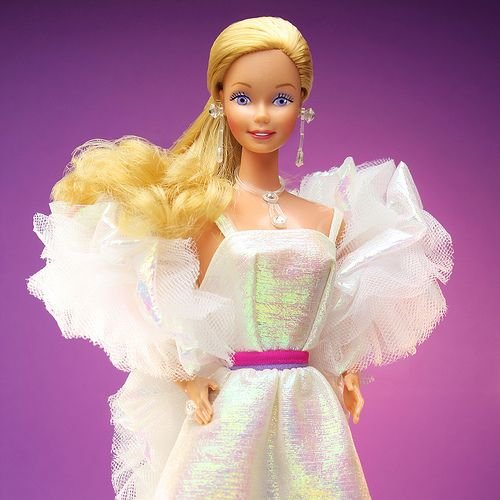
I often think about this when I remember wanting certain dolls as a child. I did not simply want plastic. I wanted access to the emotional world those dolls represented. A doll like Crystal Barbie or the Bob Mackie Gold Barbie embodied glamour, softness, theatricality, and fantasy at a time when those desires felt culturally forbidden to me as a little boy. Many collectors describe similar experiences. The doll becomes a symbolic portal into another way of being. This is why dolls matter psychologically as much as historically.
Children intuitively understand this. Anyone who has watched a child play with dolls knows they are not simply arranging objects mechanically. They are rehearsing relationships, experimenting with identity, processing emotion, and narrating social life. Dolls become stand-ins for the self, for parents, for desired futures, for fears, for fantasies. A child brushes a doll’s hair, comforts it, disciplines it, dresses it, speaks through it, or imagines becoming it. Through play, cultural norms become embodied emotionally.
This is also why representation within dolls matters so profoundly. Dolls communicate who deserves visibility, beauty, care, and centrality within culture. For generations, many children encountered dolls that reflected narrow ideals of whiteness, femininity, thinness, and ability. The emergence of Black dolls, disabled dolls, gender-expansive dolls, and culturally specific dolls has therefore carried significance far beyond marketing. Representation within material culture shapes the emotional possibilities children imagine for themselves.
I have spoken with Black collectors who describe finally seeing themselves reflected beautifully in dolls after years of absence or caricature. I have spoken with queer collectors who describe dolls as safe sites of projection long before they possessed language for their identities. I have encountered adult collectors who preserve dolls inherited from parents or grandparents not because of monetary value, but because the objects carry emotional continuity across generations. Dolls become repositories for grief, attachment, and memory in ways that outsiders often underestimate.
This emotional complexity helps explain why adult doll collecting is so frequently misunderstood. Collectors are often stereotyped as childish, escapist, or eccentric. Yet when viewed anthropologically, collecting becomes something much richer. Dolls allow adults to preserve emotional histories materially. They allow people to curate beauty, reconstruct memory, reclaim lost identities, and participate in imaginative worlds often unavailable within ordinary social life. For queer collectors especially, dolls have historically offered spaces for exploring glamour, softness, theatricality, femininity, and self-fashioning outside rigid gender expectations.
The more I study dolls, the more convinced I become that they reveal the emotional contradictions of culture with unusual clarity. They expose what societies idealize while simultaneously revealing what societies suppress. They sit at the intersection of tenderness and discipline, fantasy and commerce, intimacy and performance. A single doll can carry traces of industrial capitalism, maternal ideology, colonial aesthetics, beauty standards, childhood attachment, and personal longing all at once.
This is why I wrote Dolls Beyond Play. I wanted to move dolls out of the category of trivial nostalgia and place them back into the larger story of human culture where they belong. Dolls are not peripheral curiosities. They are among the most emotionally and symbolically dense objects humans create. Through them we can trace histories of gender, race, capitalism, beauty, kinship, memory, and desire. We can observe how identities are constructed materially and emotionally across generations.
In the end, dolls matter because humans matter. The miniature bodies we create tell stories about the full-sized lives we are trying to understand.
References
Appadurai, A. (1986). The Social Life of Things: Commodities in Cultural Perspective. Cambridge University Press.
Douglas, M., & Isherwood, B. (1979). The World of Goods. Basic Books.
Miller, D. (2010). Stuff. Polity Press.
Rogers, M. F. (1999). Barbie Culture. Sage Publications.
Sutton-Smith, B. (1997). The Ambiguity of Play. Harvard University Press.
Tilley, C., et al. (2006). Handbook of Material Culture. Sage Publications.
Winnicott, D. W. (1971). Playing and Reality. Routledge.
