Before Barbie, There Was Cissy: Madame Alexander’s Glamour Doll
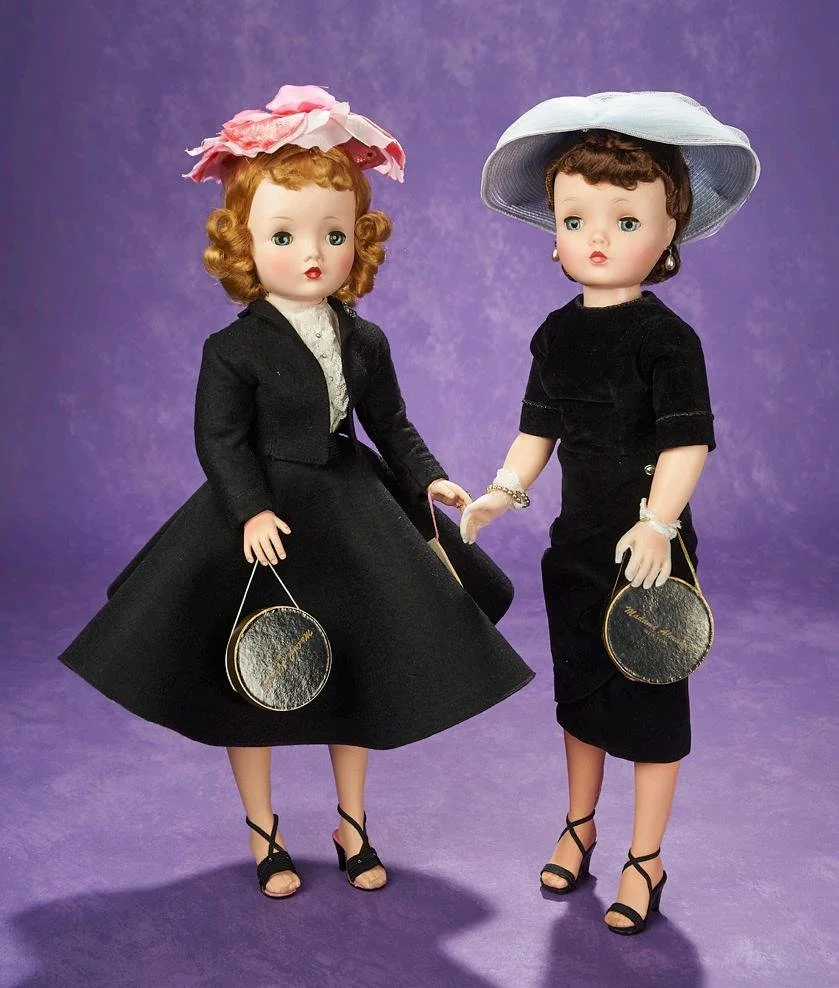
Vintage Cissy © Theraults
Before Barbie transformed the fashion doll industry, there was Cissy. Introduced by Madame Alexander in 1955, Cissy occupies a remarkable and often overlooked place in American cultural history. She arrived during a moment when the United States was redefining ideas about femininity, glamour, domestic aspiration, and postwar prosperity. More than a children’s toy, Cissy reflected evolving social ideals surrounding beauty, adulthood, fashion, and status. Years before Barbie’s teenage modernity dominated the marketplace, Cissy presented something very different: a sophisticated adult woman rendered in miniature form with couture-inspired elegance and an unmistakably mature presence.
What made Cissy revolutionary was not simply her size or wardrobe, but the kind of woman she represented. Standing approximately twenty inches tall, she featured an adult hourglass figure, rooted hair, high-heeled feet, and carefully tailored fashions inspired by Paris couture and mid-century American luxury. At a time when most dolls represented babies or young children, Cissy appeared unmistakably adult. Her visual language reflected the polished femininity of the 1950s: fitted gowns, gloves, pearls, cinched waists, and the glamour associated with actresses like Grace Kelly and Elizabeth Taylor. She embodied a specifically postwar ideal of womanhood rooted in elegance, presentation, and cultivated social identity.
Cissy also reveals something larger about the role dolls play within society. Dolls are not passive objects. They help communicate ideas about bodies, beauty, gender expectations, and social belonging. Through clothing, hairstyling, accessories, and roleplay, dolls teach visual scripts about identity and self-presentation. Cissy did this through a notably refined aesthetic. Unlike Barbie, whose later appeal centered around teenage independence, career fantasy, and reinvention, Cissy projected adult composure and established femininity. Her fashions suggested cocktail parties, formal dinners, luxury travel, and upper-middle-class social life. In many ways, she reflected the aspirations of 1950s America itself.
The history of Cissy is also closely tied to important changes in manufacturing and design within the American doll industry. Madame Alexander, founded by Beatrice Alexander, had already become known for literary dolls, composition dolls, and exceptionally detailed craftsmanship. Cissy represented the company’s transition into the modern era of hard plastic production while maintaining the elegance and artistry associated with earlier doll traditions. Her clothing often featured real fabrics, intricate tailoring, and couture-level detailing uncommon in mass-produced toys of the period. Collectors frequently note that many original Cissy garments rival actual mid-century fashion construction in miniature form.
Yet despite her innovation, Cissy’s cultural dominance was short-lived. The arrival of Barbie in 1959 dramatically altered the direction of the American fashion doll market. Barbie was smaller, less expensive to manufacture, and closely aligned with the rise of youth culture in the 1960s. Where Cissy represented adult refinement, Barbie represented possibility, mobility, and modern girlhood. Barbie could continuously reinvent herself through careers, trends, and contemporary lifestyles. Cissy belonged to a more formal world centered on elegance and social polish. As American culture became increasingly youth-oriented and casual during the 1960s, Cissy’s aesthetic began to feel tied to an earlier generation.
Still, influential cultural objects rarely disappear completely. By the late 1990s, Cissy experienced a significant revival among adult collectors. This renewed interest coincided with broader fascination surrounding vintage fashion, mid-century design, and nostalgic Americana. At the same time, doll collecting itself was becoming increasingly recognized as a serious collector culture rather than merely a childhood pastime. Adult collectors revisited Cissy not only as a doll, but as a reflection of fashion history, postwar aesthetics, and twentieth-century American ideals surrounding femininity and luxury.
Madame Alexander responded by reintroducing Cissy in collector editions that emphasized glamour, craftsmanship, and nostalgia. These revival dolls heightened the dramatic elegance associated with the original line through elaborate gowns, rooted eyelashes, rich fabrics, and theatrical styling. Importantly, the revival occurred during a moment when fashion dolls themselves were increasingly positioned as collectible art objects for adults rather than toys intended solely for children. In many ways, Cissy’s return felt inevitable because she had always occupied a space between plaything, fashion object, and decorative art.
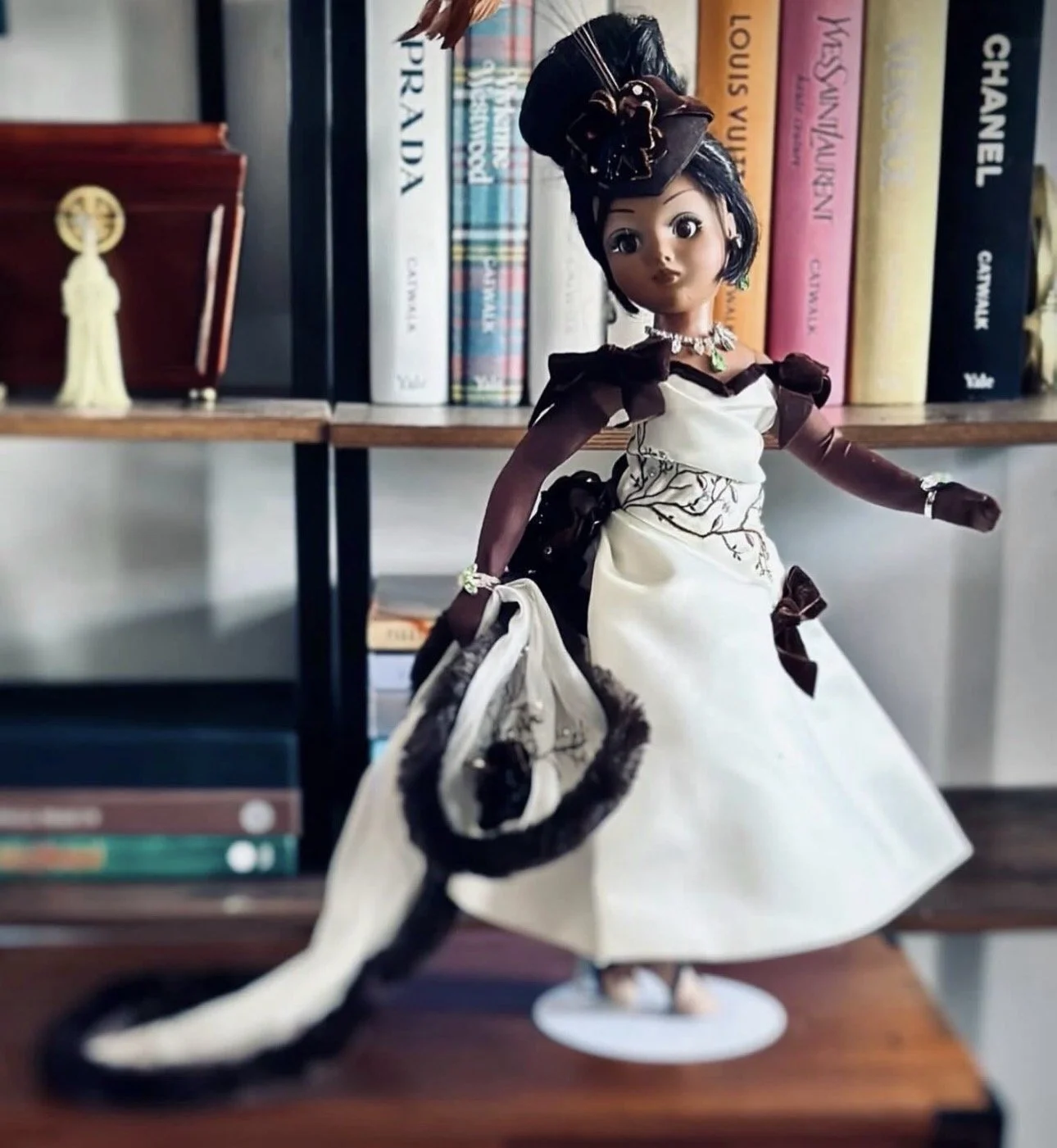
Modern Cissy. Authors Collection
Cissy’s legacy becomes especially important when compared directly to Barbie. Barbie’s mythology is built upon transformation and endless reinvention. She reflects changing cultural trends and adapts constantly to new social ideals. Cissy functions differently. She is less concerned with becoming something new and more invested in sustaining an atmosphere of timeless glamour. Barbie democratized fashion fantasy for a mass audience. Cissy maintained an aura of exclusivity and sophistication tied to couture fashion and adult femininity.
This distinction matters historically because it challenges the tendency to treat Barbie as the singular origin point of the modern fashion doll. Cissy predates Barbie by four years and introduced many features later associated with fashion dolls, including interchangeable wardrobes, rooted hair, high-fashion styling, and mature femininity. Yet she approached those elements through an entirely different cultural framework. Barbie emerged from the optimism, speed, and mobility of late twentieth-century consumer culture. She reflected the rise of suburbia, television advertising, youth marketing, and the expanding fantasy of personal reinvention that shaped the 1960s and beyond. Barbie’s world was aspirational, but it was also fundamentally modern. She could become anything because postwar America increasingly imagined identity itself as flexible, mobile, and endlessly improvable through consumption.
Cissy belonged to an earlier social imagination. She emerged from the polished atmosphere of postwar department stores, fashion salons, women’s magazines, and luxury presentation culture. Her elegance reflected a generation shaped by wartime austerity followed by economic expansion, where refinement itself became a visible marker of stability and success. The world surrounding Cissy was one of white gloves, formal entertaining, curated domestic interiors, and carefully maintained public appearances. Mid-century femininity was often constructed through ritualized presentation: dressing for dinner, coordinated accessories, carefully styled hair, and social etiquette that communicated class aspiration as much as personal taste. Cissy embodied that visual language completely. Her glamour was not playful in the way Barbie’s later glamour would become. It was composed, adult, and socially disciplined.
This difference also reflects a larger cultural shift in how America imagined womanhood during the second half of the twentieth century. Cissy arrived at the height of a culture that idealized polished adulthood. Barbie arrived as American culture became increasingly youth-centered. By the early 1960s, the teenager had become one of the most powerful consumer identities in American life. Fashion, music, advertising, and entertainment industries increasingly revolved around youth culture, mobility, and novelty. Barbie fit perfectly into that transformation. Cissy did not. Her sophistication belonged to a world where adulthood itself still carried aspirational power.
Today, Cissy remains significant because she preserves an alternative vision of what the American fashion doll could have become. Before the dominance of teenage branding and contemporary celebrity-driven consumer culture, there existed another model rooted in sophistication, ritualized presentation, craftsmanship, and formal glamour. Looking at Cissy today is not simply an exercise in nostalgia. It is an encounter with mid-century America’s aspirations surrounding beauty, refinement, social identity, and femininity itself. She represents a period when elegance was understood not as effortless individuality, but as something carefully constructed through discipline, styling, and social performance.
Cissy also reveals how deeply fashion dolls preserve emotional atmospheres from the eras that produced them. Collectors are often responding to more than the object itself. They are responding to an entire visual and emotional world embedded within it. Cissy evokes the golden age of American department stores, postwar prosperity, couture-inspired fashion illustration, cocktail culture, and the fantasy of urban sophistication. She recalls the era of Fifth Avenue window displays, formal holiday parties, mink stoles, beauty salons, and the highly curated femininity promoted through magazines like Vogue and Ladies’ Home Journal. Even her scale feels significant. Unlike Barbie’s smaller, more portable body, Cissy’s larger form gave her a striking physical presence closer to display mannequins and fashion models than traditional play dolls.
And perhaps that explains why collectors continue to respond so strongly to her. Cissy does not simply represent fashion. She captures a mood — a world of department store elegance, cocktail-hour glamour, careful styling, and postwar optimism that contemporary culture both critiques and romanticizes. Unlike Barbie, who continuously evolves alongside the present, Cissy remains suspended within the dream of another era entirely. She offers a glimpse into a vision of femininity built not around reinvention or speed, but around poise, ceremony, luxury, and cultivated presentation. In that sense, Cissy feels less like a precursor to Barbie and more like the final expression of an older American ideal before youth culture permanently transformed the fashion doll forever.
References
BillyBoy*. (1987). Barbie: Her Life & Times, and the New Theater of Fashion. Crown Publishers.
Formanek-Brunell, M. (1993). Made to play house: Dolls and the commercialization of American girlhood, 1830–1930. Yale University Press.
Lord, M. G. (1994). Forever Barbie: The unauthorized biography of a real doll. William Morrow & Company.
Madame Alexander Doll Company. (n.d.). History of Madame Alexander. Madame Alexander Official Website
Pannabecker, J. R. (1994). Dolls and design in American culture. Journal of American Culture, 17(1), 71–79.
Rand, E. J. (1995). Barbie’s queer accessories. Camera Obscura, 13(1), 27–41.
Tulloch, C. (2010). The birth of cool: Style narratives of the African diaspora. Berg Publishers.
