What Kind of Doll Collector Are You?
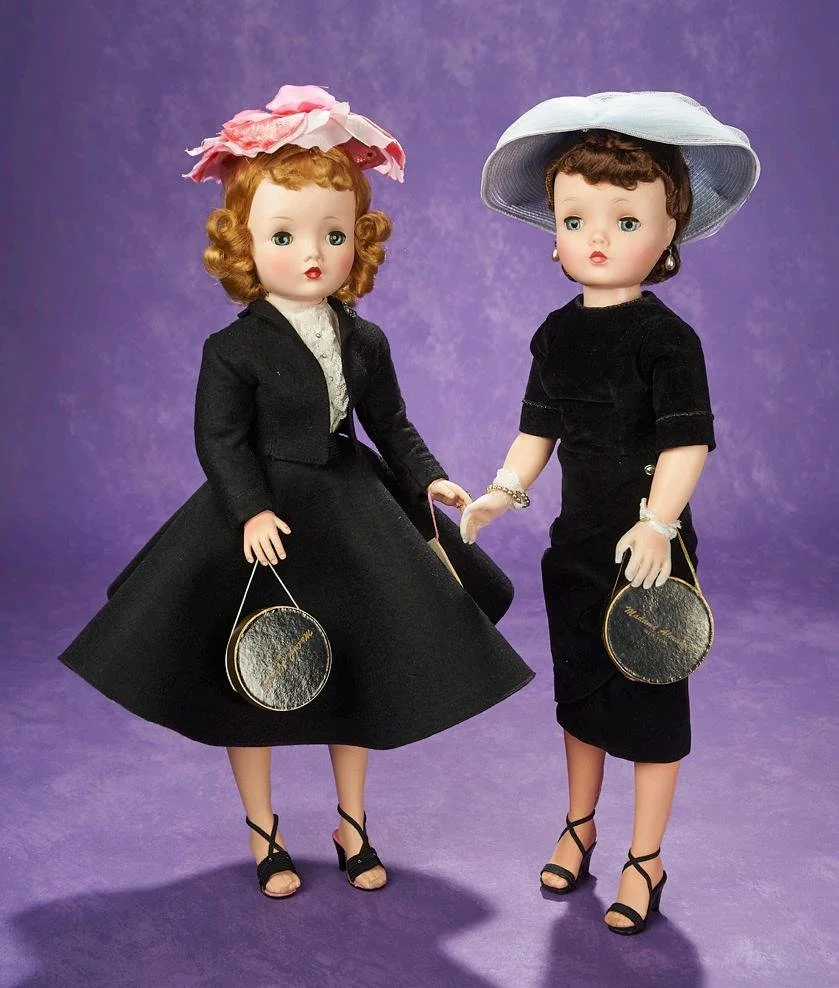
One of the questions people who do not collect dolls often ask is, "Why dolls?" It is a fair question, and one that is more difficult to answer than it initially appears. Dolls occupy an unusual place in modern culture.
They exist at the intersection of childhood and adulthood, play and art, commerce and memory. They can be toys, fashion objects, historical artifacts, artistic mediums, emotional companions, or symbols of an era. To someone standing outside the hobby, a room filled with dolls can seem bewildering. The assumption is often that collectors are collecting the dolls themselves. Yet after spending years around collectors, and after becoming one myself, I have come to suspect that dolls are rarely the thing being collected.
What fascinates me is how different two collectors can be while owning objects that appear nearly identical. One person sees a 1960s Barbie and immediately begins talking about postwar America, changing ideals of femininity, and the rise of consumer culture. Another sees the same doll and starts imagining how she might be restyled, photographed, or transformed. A third becomes interested in production variations, factory markings, and release dates. A fourth simply finds her beautiful. The doll remains the same, but the relationship changes entirely.
Once I started paying attention to collectors rather than collections, a different question began to emerge. The interesting question is not "Why dolls?" but "What kind of collector are you?" What follows are a few collector archetypes I have encountered over the years. These are not rigid categories, and most people will likely recognize themselves in more than one. We move between them as our interests evolve and our collections mature. Still, these archetypes reveal something important about the many different ways people find meaning through dolls—and perhaps something about ourselves as well.
The Historian
The historian is often less interested in ownership than in preservation. These collectors are drawn to dolls because dolls tell stories about the cultures that created them. A 1960 ponytail Barbie is not merely a doll; she is evidence of postwar American aspirations, changing ideas about femininity, consumer culture, and fashion. A composition doll from the 1930s tells a different story. A French fashion doll from the nineteenth century tells another. Historians collect because dolls function as miniature archives. They preserve information about clothing, manufacturing, technology, beauty standards, childhood, and social values. When historians look at a doll, they are often looking through it toward the world that produced it.
The Artist
The artist sees something different. Artists are often drawn to dolls as objects of imagination and transformation. They repaint them, reroot them, redesign them, photograph them, dress them, and create narratives around them. For these collectors, the doll is not a finished object but a starting point. The attraction lies in possibility. A doll becomes a canvas through which aesthetic ideas can be explored and expressed. In many artist communities, the final doll matters less than the creative process itself.
The Archivist
The archivist occupies a space somewhere between historian and curator. Archivists are often motivated by preservation, but their attention is directed toward completeness and documentation. They know production dates, release variations, factory markings, catalog numbers, and obscure editions. They save brochures, advertisements, boxes, and paperwork. There is a desire to protect knowledge from disappearing. In a world where objects are constantly discarded and forgotten, archivists create order against the forces of loss.
The Nurturer
The nurturer is perhaps the collector type most commonly associated with dolls, though it is far from universal. These collectors experience dolls relationally. They enjoy caring for them, arranging them, displaying them, changing their clothing, and creating environments for them. The impulse is not unlike gardening. There is satisfaction in tending, maintaining, and caring for something beautiful. Many nurturers speak about their collections in ways that emphasize comfort, companionship, and emotional connection. The collection becomes less a museum and more a living environment.
The Completionist
The completionist is often misunderstood. Popular culture tends to portray completionists as obsessive, but completionism often emerges from a desire for coherence. A complete collection offers a sense of order in a world that frequently feels fragmented. There is pleasure in finishing a series, locating a missing piece, or seeing an entire line assembled together. The satisfaction comes not simply from possession but from resolution. The collection tells a complete story.
The Aesthete
The aesthete is the collector type I increasingly recognize in myself as I get older. Aesthetes are drawn to beauty. They are less interested in rarity, historical significance, or completeness than in visual impact. A particular face sculpt, silhouette, hairstyle, fabric, or color palette captures something they find meaningful. For aesthetes, dolls become repositories of beauty itself. They preserve moments in fashion history, ideals of elegance, and visions of artistry that continue to resonate long after their cultural moment has passed.
The Hunter
The hunter often receives less attention than other collector types, yet the thrill of the hunt is one of the most powerful forces in collecting. Hunters live for discovery. They search flea markets, estate sales, antique shops, convention rooms, online auctions, and obscure corners of the internet. The acquisition itself is often secondary to the pursuit. For hunters, collecting is an adventure. The excitement comes from uncertainty. Every search contains the possibility of finding something extraordinary. The object matters, but the story of finding it often matters just as much.
The Nostalgist
The nostalgist collects memory. These collectors are drawn toward dolls that connect them to specific periods of their lives. The attraction is rarely about the object alone. A childhood Barbie, an American Girl doll, a Madame Alexander doll seen in a department store window, or a favorite toy from a long-forgotten Christmas becomes a doorway into the past. Anthropologists often describe objects as carriers of memory. Nostalgists understand this instinctively. The doll serves as a physical anchor for experiences, emotions, and identities that might otherwise fade.
The Curator
The curator approaches collecting much as a museum curator approaches an exhibition. Curators are highly selective. They are not necessarily interested in owning everything. Instead, they seek objects that fit a particular vision. Every acquisition has a purpose. Every display tells a story. A curator's collection often feels cohesive because it reflects a carefully developed point of view. The collection itself becomes an artistic statement about taste, history, beauty, or meaning.
The Community Builder
Some collectors are motivated less by dolls than by the people who love them. These collectors organize conventions, moderate groups, host gatherings, produce newsletters, create online content, and help newcomers enter the hobby. They derive enormous satisfaction from connecting others who share their interests. Anthropologically speaking, collecting has never been solely about objects. It is also about belonging. Community builders understand that hobbies survive because relationships survive. Their collections are important, but the social world surrounding those collections is often even more meaningful.
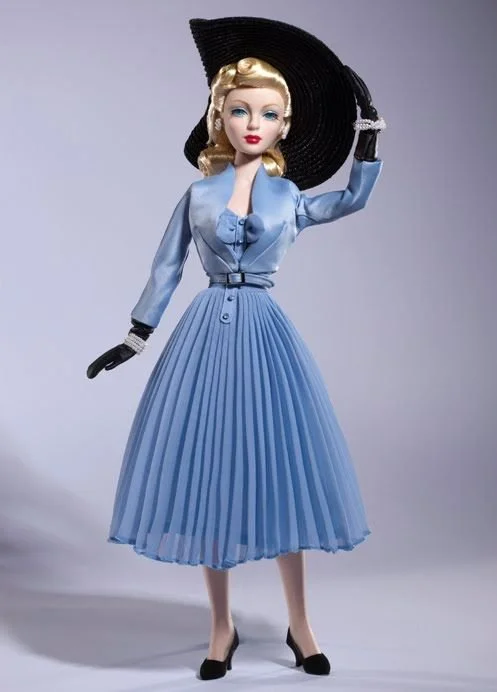
What fascinates me most is that doll collectors are rarely collecting dolls alone. The dolls are only the visible layer of the collection. Beneath them sit other motivations, some obvious and some difficult even for the collector to name. Historians collect stories. Artists collect possibilities. Archivists collect knowledge. Nurturers collect relationships. Completionists collect wholeness. Aesthetes collect beauty. Hunters collect discovery. Nostalgists collect memory. Community builders collect connection.
This is why explanations rooted solely in monetary value almost always fail. Most collectors can immediately identify dolls that are worth very little financially but would be nearly impossible to replace emotionally. The attachment rarely comes from rarity or price. It comes from the stories attached to an object, the beauty it embodies, the period of life it represents, or the experience of finding it in the first place. What gives a doll significance is not what it is worth, but what it has come to mean.
Perhaps that is why collecting appears across cultures and throughout history. The objects change, but the impulse remains remarkably consistent. We gather things because they help us remember, preserve, and make sense of our lives. Seen this way, a doll collection is never simply a collection of dolls. It is a record of attention, affection, curiosity, and memory. The dolls may be made of vinyl, porcelain, cloth, or plastic, but what collectors are ultimately preserving is something far less tangible: the pieces of life they do not want to lose.
