Truly Outrageous: Jem and the Holograms and the Glittering Dreams of the 1980s
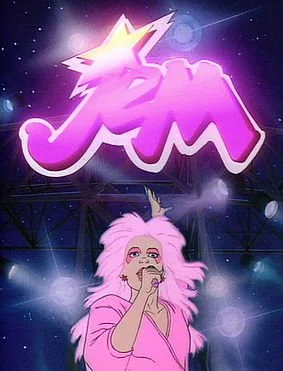
Few toys capture the aspirations of the 1980s quite like Jem and the Holograms.
Part fashion fantasy, part music video, part marketing machine, Jem arrived in 1985 at the exact moment when American culture was obsessed with celebrity, style, technology, and spectacle. To revisit Jem today is to encounter a remarkably complete snapshot of the decade—a world of neon colors, synthesizer-driven pop music, dramatic fashion, entrepreneurial ambition, and the belief that fame itself could be transformative.
For collectors, Jem dolls are often remembered for their striking fashions and vivid colors. Yet as objects of material culture, they tell a much larger story. They reveal what American culture valued, desired, and imagined during the mid-1980s. More than toys, they were physical manifestations of a cultural moment when glamour and success were increasingly marketed as attainable identities.
In many ways, Jem and the Holograms was more than a doll line. It was a cultural mutation of the entire decade. The series absorbed the music, fashion, technology, celebrity culture, and excess of the 1980s, then reflected them back in amplified form. Looking at Jem today is like looking into a funhouse mirror of the decade itself—everything brighter, louder, more glamorous, and more outrageous.
The premise of Jem and the Holograms was almost impossibly ambitious.
Jerrica Benton, owner of a music company, transforms into the glamorous rock star Jem through the use of Synergy, a powerful holographic computer capable of creating dazzling visual illusions. By day she is a businesswoman; by night she becomes an international music sensation. The concept neatly combined many of the decade's obsessions. There was technology, represented by Synergy's futuristic holograms. There was entrepreneurship, embodied by Jerrica's role as a company executive. There was fashion, fame, music, and performance. Most importantly, there was transformation.
Like so many stories marketed to children during the era, Jem suggested that identity itself could be reinvented through style, confidence, and visibility. The message was distinctly 1980s: success was not merely something one achieved—it was something one performed. Yet viewed through a contemporary lens, there is something else embedded within Jem's premise. At its heart is the idea that identity can be fluid, constructed, and consciously performed. Jerrica is not pretending to be Jem; Jem is a fully realized version of herself, brought into existence through fashion, music, technology, and self-expression. The tension between one's private identity and public persona gives the series an inherent queerness, even if it was never explicitly framed in those terms.
This helps explain why the franchise continues to resonate with many LGBTQ+ fans decades later. Long before discussions of gender performance, digital identities, or curated online selves entered mainstream culture, Jem imagined a world where transformation was empowering rather than deceptive. Through Synergy, Jerrica could become the person she wanted to be, and that idea—of self-creation through style, performance, and visibility—has long held particular significance within queer culture. What makes the series remarkable in retrospect is how completely it embraced this vision. Long before social media influencers, digital avatars, drag competitions, virtual personas, or carefully curated online identities, Jem imagined a world where technology could help create entirely new versions of ourselves. The fantasy may have been wrapped in glitter, neon, and holograms, but the underlying idea feels surprisingly contemporary. In many ways, Jem was not simply telling children that they could become famous. It was suggesting that identity itself could be designed, performed, and transformed.
When examining Jem as a cultural artifact, it is impossible to separate the series from the rise of MTV.
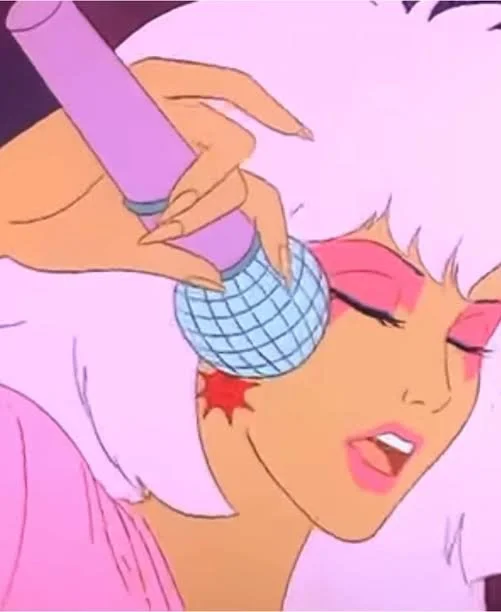
Launched in 1981, MTV fundamentally changed how music was consumed. Musicians were no longer simply heard; they were seen. Image became inseparable from sound. Fashion, choreography, makeup, and visual storytelling became central to popular music. Jem and the Holograms translated this new reality directly into children's entertainment. Each episode featured original songs presented as miniature music videos. Fast editing, dramatic visuals, and highly stylized performances mirrored the aesthetics that dominated television screens throughout the decade. The animated series functioned almost as a training ground for understanding celebrity culture. Children learned that music was not only about sound but about branding, presentation, and image.
The musical styles featured in the series reflected contemporary trends as well. Synth-pop, new wave, arena rock, dance-pop, glam rock, punk influences, and the emerging aesthetics of hair metal all found their way into Jem's soundtrack and visual world. Listening to the music today offers a surprisingly effective survey of mainstream mid-1980s popular music. The songs echoed the sounds of artists who dominated radio and MTV while translating adult pop culture into a format designed for younger audiences.
The series also borrowed heavily from some of the decade's most visually distinctive performers. Viewers can spot echoes of Dale Bozzio's futuristic style, traces of Nina Hagen's theatrical eccentricity, and the larger-than-life visual experimentation that defined the era's most memorable music stars. Rather than simply depicting musicians, Jem transformed them into animated archetypes. The result was a world where every performer was a fashion icon, every song was an event, and every appearance was a performance.
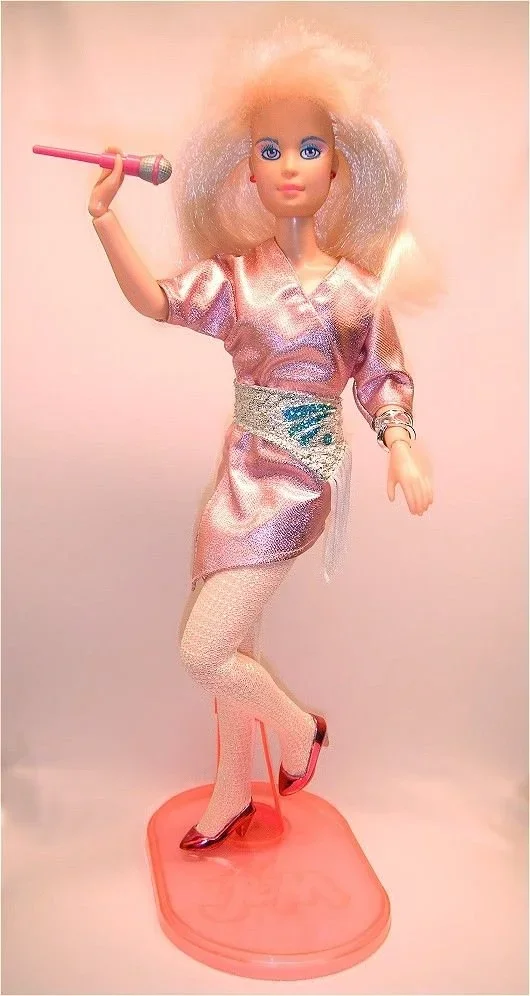
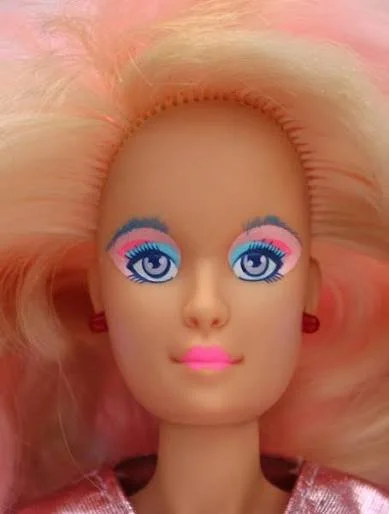
The dolls were unapologetically extravagant. Metallic fabrics, oversized earrings, dramatic silhouettes, bold makeup, and electric colors transformed each character into a wearable expression of 1980s aesthetics. Looking at a Jem doll today is like opening a time capsule from the era of shoulder pads, designer labels, and music-video glamour.
What many collectors do not realize is that the fashion design behind Jem was extraordinary in both scale and ambition. Working with Hasbro, fashion designer Deborah Pugh helped create more than 1,000 unique outfits throughout the life of the franchise. The achievement remains one of the most ambitious costume design efforts ever undertaken for an animated property. Even more impressive was the sophistication of the references. The designs drew directly from the pages of Vogue and from the work of some of the era's most influential designers, including Yves Saint Laurent, Emanuel Ungaro, Valentino, and more. Rather than simplifying fashion for children, Jem translated contemporary runway culture into animation. The result was a cast of characters who may have been among the best-dressed rock stars of the 1980s—animated or otherwise. . Fashion in the Jem universe was never merely decorative. It communicated identity. Jem's bright pink hair immediately distinguished her from Jerrica. The Holograms and the Misfits each possessed distinct visual styles that reflected their personalities and musical identities. The dolls taught children to read clothing as a language—a way of expressing individuality, aspiration, and belonging.
This reflected a broader cultural shift occurring during the decade. The 1980s saw an increasing emphasis on personal branding long before the term existed. Success became tied to presentation. Jem embodied this idea completely. In this sense, Jem was a masterclass in pushing the boundaries of animation. Rather than using animation simply to tell stories, the series used it to create a heightened version of contemporary culture—one where music, fashion, and identity could become spectacular forms of visual expression.
Jem was also a product of a significant transformation in toy history.
During the 1980s, regulatory changes helped blur the line between children's entertainment and advertising, allowing animated television programs to function increasingly as platforms for toy sales. Rather than creating toys inspired by successful shows, companies often developed television programs specifically designed to support product lines.
Produced by Hasbro and Sunbow Productions, Jem represented one of the most sophisticated examples of this strategy. The dolls and animated series were conceived together, with each medium reinforcing the other. The television show generated emotional investment in the characters, while the dolls allowed children to extend those stories through imaginative play. Yet reducing Jem to a marketing strategy misses its broader significance. The line succeeded because it accurately reflected the values and aspirations circulating throughout American culture. The dolls offered children access to a fantasy of creativity, independence, celebrity, entrepreneurship, and self-expression. Purchasing a Jem doll was not simply acquiring an object; it was participating in a larger cultural narrative about who one might become.
This is where collecting becomes particularly interesting. Toys endure because they carry meaning. Long after their original commercial purpose has faded, they continue to function as repositories of memory, identity, and cultural history. For many collectors, Jem represents more than nostalgia. The dolls preserve a specific vision of the future imagined by the 1980s—a future where technology was exciting, fashion was fearless, and creativity could transform ordinary life into something extraordinary.
The original Jem doll line was relatively short-lived. Compared to enduring toy giants such as Barbie, its commercial lifespan lasted only a few years. Yet its cultural afterlife has proven remarkably durable, and collectors continue to seek out the dolls, fashions, accessories, and memorabilia decades after their initial release.
Part of this appeal is certainly nostalgia, but nostalgia alone does not explain Jem's lasting fascination. Plenty of toy lines evoke fond childhood memories; far fewer continue to inspire passionate collecting communities, scholarly interest, and cultural analysis decades after they disappear from store shelves. The franchise survives because it distilled the aspirations of an entire decade into a collection of tangible objects. Through dolls, music, animation, and fashion, Jem preserved the cultural values of the mid-1980s in physical form.
For collectors and scholars of material culture, Jem offers a valuable reminder that toys are never merely toys. They embody cultural values, social expectations, economic realities, and collective dreams. Through plastic, fabric, color, music, and design, they communicate what a society admires, desires, and imagines for itself. The Jem dolls were not simply playthings; they were miniature carriers of ideas about success, visibility, creativity, technology, and personal reinvention.
Jem spoke to something deeper than fame. Beneath the music videos and fashion shows was a recurring theme of transformation. Jerrica became Jem. Ordinary kids could imagine themselves as rock stars. Fashion became identity. Performance became self-expression. The series repeatedly suggested that people could create themselves through creativity, confidence, and style. That message remains surprisingly resonant in an era shaped by digital identities, personal branding, and online self-presentation.
For collectors, this helps explain why Jem remains meaningful long after its original cultural moment has passed. The dolls function as more than nostalgic objects; they are artifacts of a specific worldview. They preserve a time when technology felt magical, when fashion was fearless, when music videos shaped popular culture, and when the future seemed dazzlingly bright. Holding a Jem doll today is, in many ways, holding a piece of that cultural imagination. The dolls, the fashions, the music videos, and the animated adventures invited children to imagine themselves becoming something larger, brighter, and more glamorous than ordinary life allowed. For a brief moment in the mid-1980s, Jem and the Holograms distilled the era's fascination with technology, celebrity, fashion, performance, and transformation into a single cultural phenomenon. More than a toy line, Jem became a glittering artifact of what the decade dreamed itself to be.
And perhaps that is why collectors continue to find meaning in Jem today. The dolls are not simply reminders of the past. They are evidence of how a generation imagined the future—and of the extraordinary, outrageous, and often beautiful ways toys help us tell those stories.
