How Mel Odom’s Gene Revolutionized the Modern Fashion Doll
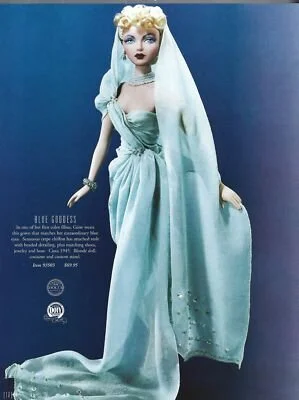
Original Advertisement for Blue Goddess Gene | © Ashton Drake Galleries
When Mel Odom introduced Gene Marshall in 1995, the modern fashion doll world changed almost overnight.
At first glance, Gene appeared to be a glamorous homage to Old Hollywood: a towering redheaded actress with arched brows, satin gowns, impeccable tailoring, and the kind of cinematic presence that seemed pulled directly from a 1940s studio publicity photograph.
But Gene was far more than a nostalgic doll. She fundamentally reshaped what adult doll collecting could become.
Today, it is easy to forget how revolutionary Gene actually was. Modern collectors are surrounded by highly stylized fashion dolls marketed explicitly toward adults. Elaborate backstories, couture-level fashions, collector conventions, serialized characters, and luxury presentation are now standard parts of the hobby. In the mid-1990s, however, this world barely existed in the form we recognize now. Barbie collecting had certainly matured, and porcelain collector dolls filled gift shops and catalog spreads, but there remained a strange divide between “toys” and “collectibles.” Gene collapsed that distinction entirely.
What made Gene so transformative was not simply her beauty, but the emotional sophistication embedded into the line itself. She was not designed as a child’s plaything that adults happened to purchase later. She was designed from the beginning for adults who already carried emotional relationships to glamour, fantasy, fashion history, cinema, and dolls themselves. Gene acknowledged adulthood openly instead of pretending collectors were merely preserving childhood innocence.
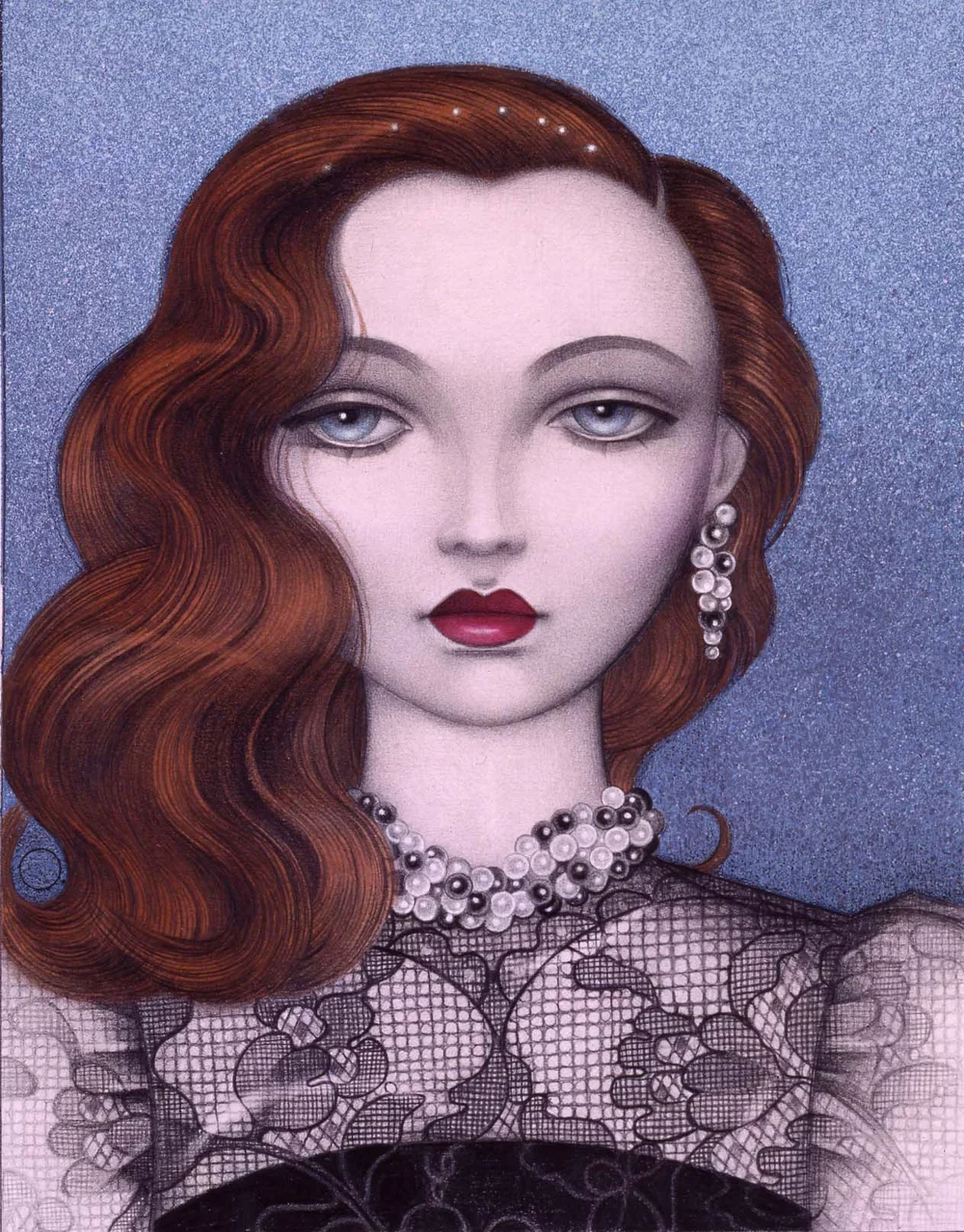
© Mel Odom - Gene Marshall Sketch
The scale alone communicated this shift. At sixteen inches tall, Gene possessed a physical presence radically different from the standard 11.5-inch Barbie silhouette that had dominated fashion dolls for decades.
The larger body allowed for extraordinary costuming. Fabrics draped differently. Sleeves could be tailored properly. Beading, trims, gloves, hats, jewelry, and embroidery suddenly operated with an entirely different level of realism. Holding a Gene doll did not feel like holding a toy scaled for a child’s hand. She felt substantial, theatrical, almost cinematic. She occupied space the way movie stars occupy space.
That cinematic quality was not accidental. Gene Marshall existed within a fully imagined Hollywood universe. She had a biography, a film career, friends, rivals, romances, costumes, publicity stills, and fictional scandals. Other characters soon emerged around her, each carrying their own aesthetics and histories. Collectors were no longer simply buying individual dolls. They were entering an unfolding world. In retrospect, Gene anticipated the immersive logic of modern fandom culture long before social media accelerated those impulses. The line invited collectors to participate emotionally, imaginatively, and narratively.
For many collectors, particularly gay men coming of age in the 1980s and 1990s, Gene also tapped into something far more personal and difficult to articulate. Old Hollywood glamour has long occupied a significant place within queer aesthetic life. Studio-era actresses represented reinvention, survival through performance, stylized femininity, and the emotional power of self-creation. Gene drew heavily from this visual language. She carried echoes of Rita Hayworth, Gene Tierney, Joan Crawford, Lana Turner, and countless other women whose images had already become mythological within queer culture.
What Gene offered was not merely nostalgia for the past, but nostalgia for an imagined emotional world. Many collectors who embraced Gene had grown up in earlier decades loving Barbie, department store glamour, movie musicals, fashion illustration, or classic cinema while simultaneously learning that these fascinations were culturally suspect, particularly for boys. By the 1990s, many of those children had become adults with disposable income and a renewed desire to reclaim the beauty, fantasy, and theatricality that once felt forbidden. Gene arrived precisely at that historical moment.
This timing mattered enormously. The 1990s witnessed a dramatic expansion of adult collecting culture across numerous industries: comics, action figures, Disney memorabilia, vintage fashion, movie props, and dolls. But Gene brought a distinctly emotional and aesthetic sophistication to that emerging market. She validated the idea that collecting could be immersive, aspirational, and deeply personal rather than merely archival or investment-oriented. The line also transformed expectations surrounding doll presentation itself. Packaging became luxurious. Promotional photography resembled fashion editorials. Costumes referenced specific eras of Hollywood design. Conventions and collector events became theatrical social spaces where collectors dressed elegantly, displayed elaborate room settings, and discussed Gene almost as though she were a living celebrity. The hobby increasingly became about world-building rather than ownership alone.
In many ways, Gene helped redefine the adult collector as a creative participant instead of a passive consumer. Collectors restyled wigs, repainted faces, designed fashions, wrote fictional biographies, built miniature sets, and photographed elaborate narratives. The doll became a collaborative object through which adults could explore fantasy, identity, aesthetics, and emotional memory. That participatory culture now feels commonplace online, but Gene helped normalize it long before Instagram or TikTok transformed doll photography into a major subculture.
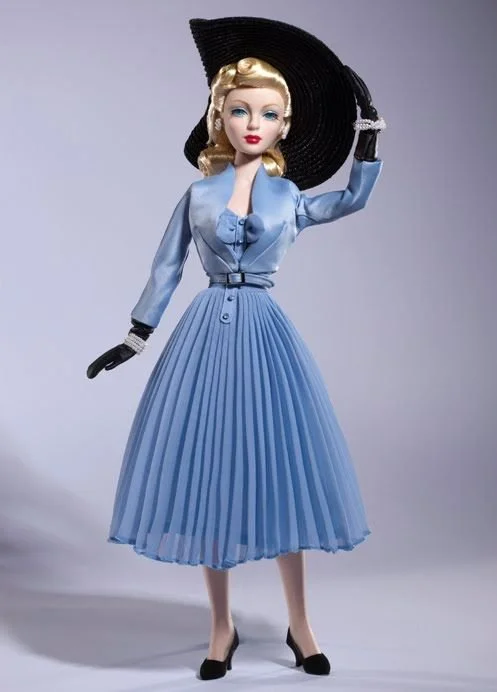
Gene reimagined by Integrity Toys. © Integrity Toys
Gene’s influence can still be seen throughout the contemporary fashion doll industry.
Later luxury lines such as Tonner Dolls, Fashion Royalty, Sybarite, and numerous independent artist dolls inherited Gene’s emphasis on scale, couture fashion, serialized storytelling, and adult-oriented glamour. Even today, many collectors continue to describe Gene as the moment they realized dolls could function as art objects, emotional companions, historical fantasies, and aesthetic identities all at once.
What is particularly remarkable is that Gene herself evolved alongside the collector market rather than remaining frozen as a nostalgic artifact of the 1990s. As adult doll collecting became more sophisticated, Gene changed with it. Later editions introduced improved articulation, more dynamic posing, increasingly refined tailoring, and higher production values that reflected the growing expectations of serious collectors. The doll world itself had shifted. Collectors no longer simply wanted beautiful dolls to display statically on shelves; they wanted movement, photography, storytelling, realism, and emotional immersion. Gene adapted to that transition while still maintaining the classic Hollywood elegance that made her iconic in the first place.
The partnership with Integrity Toys marked another important reinvention. Under Integrity’s stewardship, Gene entered a more contemporary era of collector culture, one shaped by sharper fashion aesthetics, elevated engineering, and the increasingly stylized visual language of modern high-end dolls. Yet even as the sculpting, articulation, and fashion sensibilities evolved, Gene retained her essential identity. She still carried that unmistakable sense of studio-era glamour and theatrical sophistication. In many ways, the Integrity era demonstrated Gene’s flexibility as a cultural figure. She was never simply a reproduction of the past. She was a living interpretation of glamour itself.
Perhaps most telling of Gene’s lasting significance is the way she was ultimately immortalized in resin artist form. Resin dolls occupy a rarefied space within the doll world — less mass-produced collectible and more sculptural art object. Gene’s transition into resin symbolized something profound about her legacy. She had fully crossed the boundary from commercial doll line into cultural icon. Like the great actresses who inspired her, Gene endured through reinvention. She moved from vinyl collectible to articulated fashion muse to limited-edition art doll without losing the emotional atmosphere that first captivated collectors decades earlier.
What Mel Odom ultimately understood was that adult collectors were not merely purchasing plastic figures. They were purchasing atmosphere. Memory. Fantasy. Elegance. Reinvention. Gene succeeded because she recognized that dolls do not stop mattering once childhood ends. If anything, they often become more emotionally complex with age.
Gene Marshall did not simply revive Old Hollywood glamour. She helped create the modern emotional language of adult doll collecting itself.
