The Doll I Was Never Supposed to Want
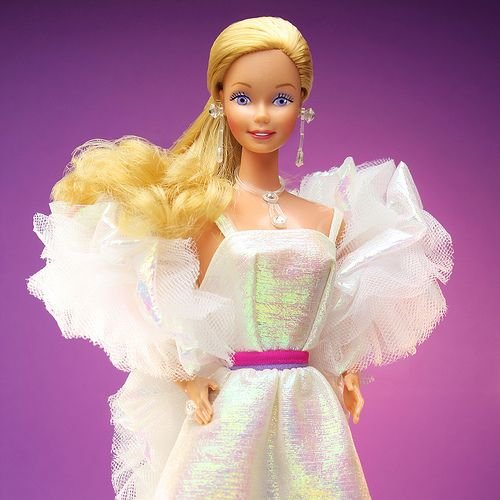
I was five years old when I first wanted Crystal Barbie. Not casually wanted her in the way children drift from one toy to another, but wanted her with a kind of intensity that felt physical. I remember seeing her in the store and feeling something lock into place inside me.
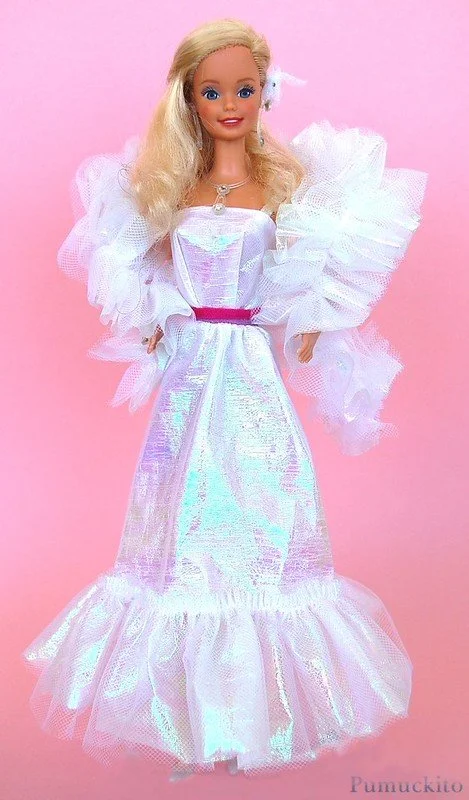
The gown shimmered under the fluorescent lights. The translucent glitter in the fabric caught light differently than the other Barbies did, almost like she carried her own atmosphere around her. Everything about her felt magical to me. Ethereal. Untouchable. She did not look like an ordinary doll so much as a visitor from some more beautiful world.
I did not yet understand that wanting her would become a problem.
At five, desire still feels innocent to you. You assume the things you love will simply make sense to other people because they make sense to you. I remember talking about Crystal Barbie openly at first. Pointing her out in stores. Hoping for her at Christmas. Thinking about her constantly in the strange obsessive way children sometimes do, where an object becomes larger than itself and starts to hold emotion, fantasy, longing, and identity all at once. I can still remember the ache of wanting her. The feeling lived somewhere in my chest.
But somewhere along the line, I began to understand that this was not the right thing for a little boy to want.
Nobody sat me down and explained masculinity to me directly. That is rarely how these things happen. Instead it arrived through atmosphere. Through reactions. Through the tiny hesitations adults make without realizing children can feel them. Through laughter that seemed harmless on the surface but carried embarrassment underneath. Through the subtle redirection toward “boys’ toys.” Action figures. Cars. Things that fought or transformed or exploded. The lesson settled into me quietly: beauty was not for me. Glamour was not for me. Dolls like Crystal Barbie belonged to girls.
And yet I still wanted her.
I think queer children often grow up inside this impossible tension between instinct and permission. Something inside you moves naturally toward softness, beauty, theatricality, femininity, ornament, or emotional intimacy long before you have language for sexuality. Before sex even enters the picture. Adults often misunderstand this entirely. They project adulthood onto childhood desires that are actually about identification, recognition, and emotional resonance. What I wanted was not to “be a girl.” What I wanted was access to the feeling the doll carried. The radiance of her. The permission to love something beautiful openly.
I did ask for her for Christmas that year. I remember the hopefulness of it. The absolute certainty children can have that wanting something badly enough might somehow bring it into existence. But Christmas morning arrived and Crystal Barbie never appeared.
What I remember instead is sitting and watching my cousin open Peaches ’n Cream Barbie.
Even now, decades later, I can still see flashes of that doll. The soft peach satin. The fullness of the skirt. The excitement in the room around her. Everyone smiling. Everyone delighted. The doll moved easily through the world as something acceptable, something celebratory. There was no tension attached to her because she belonged to the right child. Watching that happen while knowing how badly I wanted a Barbie of my own created a feeling I did not yet have words for then but recognize now immediately: shame.
Not dramatic shame. Not catastrophic shame. The quieter kind children internalize early. The shame of realizing your desires isolate you.
I remember trying to disappear inside myself that day. Trying not to look too interested. Trying not to let anyone see how badly it hurt. And that is the part that stays with me most now as an adult — not simply that I did not receive the doll, but that I learned my longing itself needed to become hidden. The performance began there. Masculinity often begins as concealment.
Looking back, I think that moment shaped far more of me than anyone around me could have understood. Because when queer children learn that certain desires are unacceptable, they do not simply stop desiring. They become watchers. Observers. Curators of distance. You learn how to admire beauty indirectly. Quietly. Safely. Through glances instead of possession. Through imagination instead of touch.
And maybe that is part of why dolls remained emotionally charged for me long after childhood. They became attached not only to beauty, but to exclusion. To longing. To the experience of standing just outside something that felt deeply aligned with you while understanding you were not supposed to cross into it.
As an adult, when I finally acquired Crystal Barbie, I was surprised by how emotional it felt. Rationally, it made no sense. It was plastic, fabric, synthetic hair, glitter. But memory does not live rationally inside the body. The moment I held her, I was suddenly aware of the child version of myself still living somewhere underneath the adult one. The five-year-old boy sitting quietly with his feelings on Christmas morning while everyone else celebrated around him.
What moves me now is realizing how young queer shame often begins. Long before identity forms clearly. Long before language. Sometimes it begins simply with beauty. With wanting the wrong object too visibly. With loving something too much.
And yet I also think that little boy recognized something true long before the adults around him did. Crystal Barbie represented a world beyond the rigid masculinity I was being taught to perform. A world where glamour, softness, fantasy, and self-creation were not weaknesses but possibilities. In that sense, the doll was never trivial. She was one of the first mirrors I ever encountered.
Which is why I still cannot think about her as just a toy. She feels more like evidence. Proof that some part of me already existed before I had the language to explain myself to anyone else.
