You Study Dolls, But Do You Collect Them?
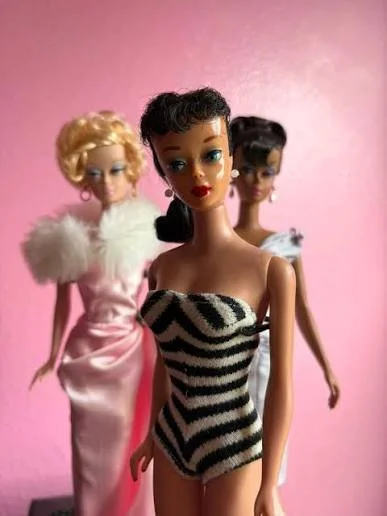
Vintage and Silkstone Barbies, author’s collection
You study dolls, but do you collect them? I am asked some version of this question surprisingly often. Usually it comes after someone learns that I study dolls, doll collectors, and collecting cultures.
There is often an assumption buried inside the question that scholarship and collecting occupy different worlds, that one belongs to research and the other belongs to personal passion. The truth is that I don't know that I would have become interested in studying dolls had I not spent most of my life trying to understand my own relationship with them. The answer, of course, is yes. I collect dolls. I have collected dolls for most of my life, although the shape that collecting has taken has changed over the years. More importantly, I study dolls because I collect them. I study doll collectors because I am one. Anthropology gave me tools to ask questions about material culture, memory, desire, and identity, but those questions were already present long before graduate school. They began in childhood, when I loved dolls deeply and completely but could not have explained why.
Looking back, one of the reasons the question remained so difficult to answer was because dolls occupied a strange position in my life. They were objects of fascination, but they were also forbidden. As a boy, I was raised that men were not supposed to love dolls. No one needed to say it directly. The message existed in toy aisles, television commercials, the assumptions adults made, and the teasing of other children. I knew dolls mattered to me, but I also knew they required explanation in ways other interests did not. Some children are given permission to love what they love openly. Others learn to build private worlds. Dolls became part of one of those worlds for me. I can remember spending long stretches of time in grocery stores while my mother shopped, completely absorbed in doll magazines. I remember sitting on bookstore floors reading Barbie Bazaar and studying photographs of collections that seemed impossibly beautiful and impossibly distant. At the time I wasn't imagining that I would someday own those dolls. I was trying to understand why I could not stop looking at them.
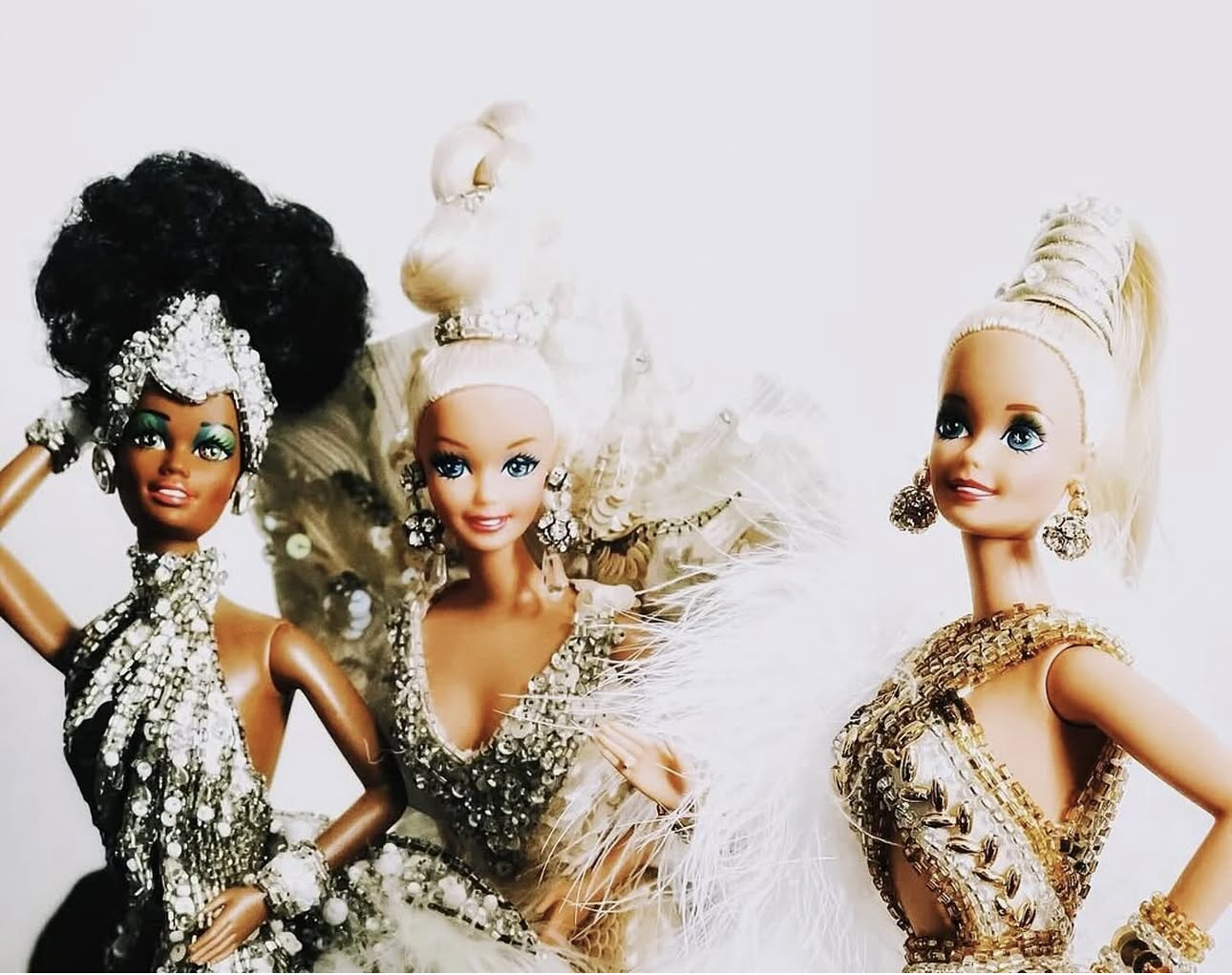
Bob Mackie Barbies: Starlight, Platinum, and Gold 1990-1991, author’s collection
The dolls themselves were beautiful, of course. Crystal Barbie remains one of those early memories that feels almost dreamlike in retrospect. The Bob Mackie dolls had a similar effect. Long before I understood fashion design, glamour, or artistry, I knew they made me feel something. What strikes me now is that many of those years were not particularly easy years. They were marked by bullying, loneliness, confusion, and the persistent awareness of being different. Beauty often felt distant from my everyday life. Yet beauty was everywhere in those magazines. It lived in photographs, display cases, and dolls whose names I memorized and whose faces I studied repeatedly. The distance between my own life and those images felt enormous, yet they remained close enough to imagine myself into. I could return to them whenever I needed to.
When I became an adult, the shame didn't disappear. It simply evolved. The problem was no longer that a boy loved dolls. The problem became that a man collected them.
There were very few places to talk openly about that interest without feeling as though it required justification. Ironically, studying dolls gave me some legitimacy. Anthropology allowed me to discuss collecting, material culture, gender, identity, nostalgia, and memory. I could analyze doll collectors and write about dolls. Yet even then there remained something vulnerable about simply admitting that I loved them. For a long time it felt easier to explain dolls than to claim them. Somewhere beneath the scholarship was still the child who had learned that some forms of beauty required secrecy.
I think about that often when I remember one of my first trips to FAO Schwarz as a young adult. I remember walking through the first floor and seeing the Barbie displays. I stopped in front of Masquerade Barbie by Bob Mackie and felt the same sense of awe I had experienced years earlier while looking at photographs in magazines. Then I rode the escalator upstairs and found myself standing in front of the Madame Alexander Cissy dolls. I remember staring at them and being unable to comprehend how anyone could spend seven hundred dollars on a doll. They seemed impossibly luxurious and impossibly beautiful. During that trip I purchased my first Gene Marshall doll, and I realize now that Gene represented something I would spend decades pursuing. She wasn't merely a doll. She was a portal into another moment, another aesthetic world, another vision of beauty preserved through fashion and storytelling.
Over time my collection grew. Artist dolls by Monica Mechling entered my life. Dolls by Wendy Lawton. Gene dolls. Tonner dolls. Vintage dolls. One-of-a-kind creations. Hundreds of dolls passed through my hands over the years, and the more I studied collecting cultures, the more I understood that collectors are rarely collecting objects alone. They are collecting memories, aspirations, identities, and fragments of themselves that have attached to particular things. The older I get, the more selective I become, and the clearer the pattern appears. The dolls that stay with me are the dolls that preserve a particular vision of beauty. The late 1990s Cissy dolls. Early Bob Mackie Barbies. Vintage ponytail Barbies from the 1960s. Their craftsmanship is remarkable, but that alone is not why they matter to me. They preserve worlds that once felt distant and inaccessible.
As I have gotten older, I have come to understand that collecting these dolls is not really about acquiring objects. It is about collapsing a distance that existed for most of my life. The child reading Barbie Bazaar could never have imagined owning many of the dolls that now live in my collection. More importantly, he could not have imagined becoming the kind of person who could love them openly. When I buy an early Bob Mackie doll today, I am reconnecting with the child who stood in grocery store aisles staring at photographs and wondering why they mattered so much. When I acquire one of those Cissy dolls that once sat behind glass at FAO Schwarz, I am reclaiming something that felt forever beyond reach.
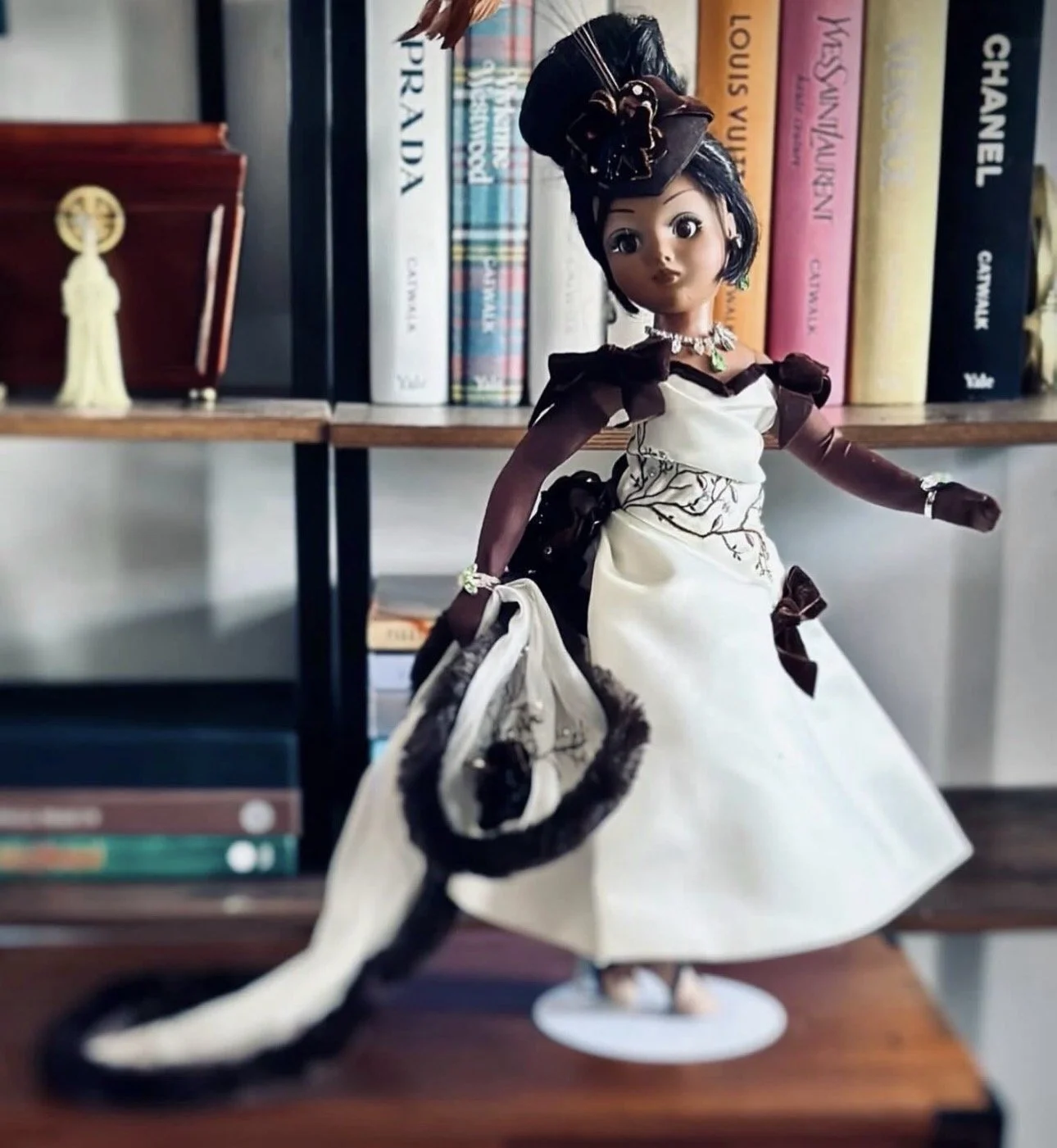
Cafe Cissy, 1996, author’s collection
I no longer think the healing comes from ownership itself. Objects cannot repair old wounds. What they can do is help us recover parts of ourselves that we learned to abandon, hide, or distrust.
Somewhere inside all those years of fascination was a child who understood beauty before he had language for it. He understood that beauty could be found in fashion, craftsmanship, imagination, and glamour. The shame came later. The explanations came later. The defenses came later. The attraction itself was immediate and instinctive.
When people ask whether I collect dolls, they are usually asking about a hobby. What they are really asking, though neither of us may realize it, is whether the things that captivated me as a child still matter. The answer is that they matter more than ever. Studying dolls helped me understand collectors. Collecting dolls helped me understand myself. Somewhere between those two pursuits I realized that the dolls I cherish most are not reminders of what I lacked. They are reminders of what survived. Through loneliness, bullying, fear, secrecy, and shame, there remained a part of me that continued reaching toward beauty. Those dolls are not simply artifacts of fashion history or examples of exceptional design. They are evidence of a relationship with beauty that persisted long before I knew how to explain it, and long before I knew that it belonged to me all along.
