When a Clone Becomes Art: The Unexpected Appeal of Persia
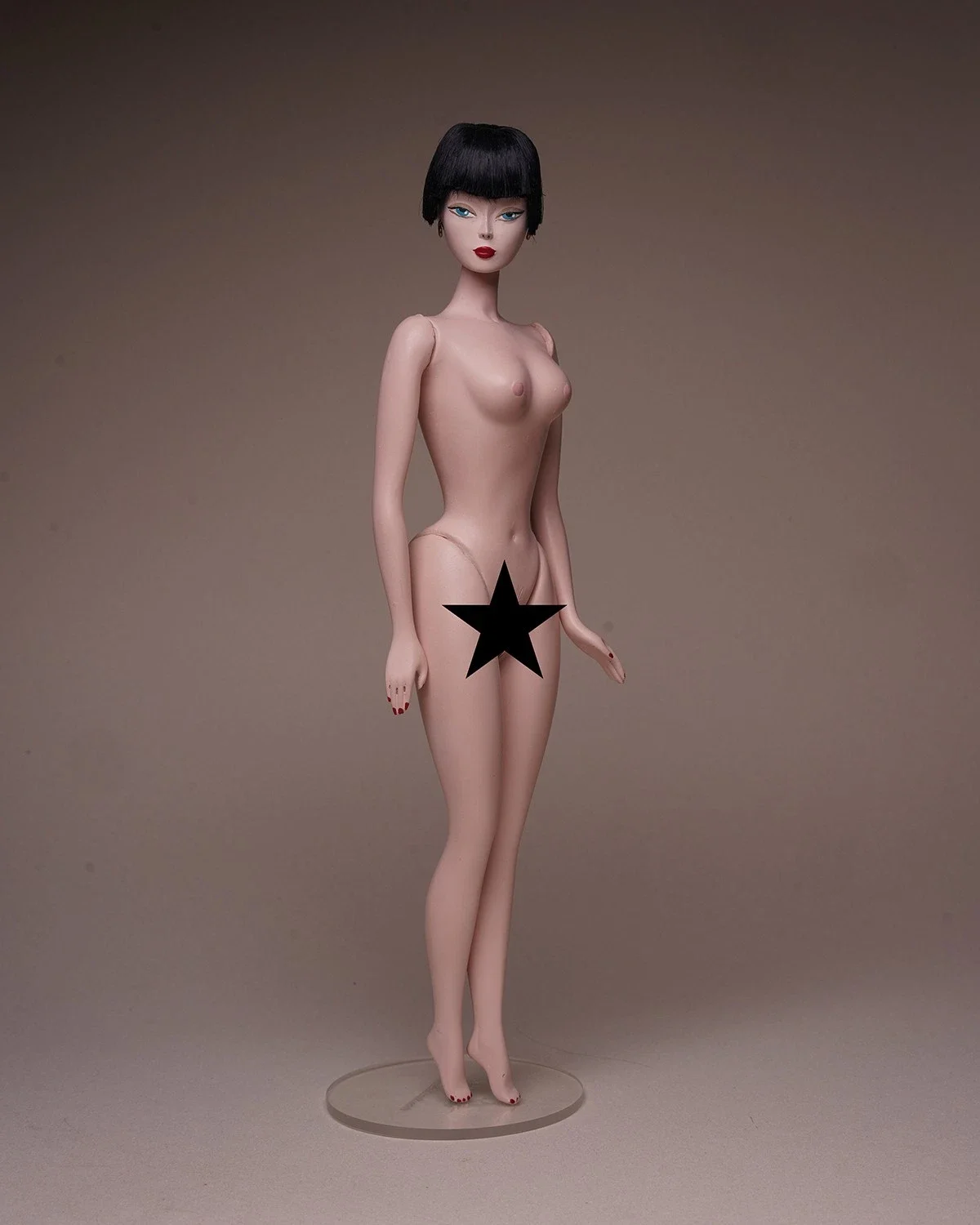
Persia by Darrell Wallace
Few dolls have sparked as much debate among fashion doll collectors as Persia by Darrell Wallace.
Introduced in the late 2000s, the handmade resin doll immediately drew comparisons to the legendary Mdvanii, one of the most influential and unconventional fashion dolls ever created.
Mdvanii challenged traditional ideas about what a fashion doll could be. Created by fashion designer and artist BillyBoy* and artist Lala, her elongated proportions, dramatic features, mature body sculpt, and high-fashion aesthetic occupied a space somewhere between collectible doll, sculpture, and contemporary art. She was never intended to be a mainstream fashion doll. Instead, she became a cult favorite among collectors drawn to avant-garde design.
When Persia appeared, many collectors initially viewed her as another Mdvanii-inspired doll. The resemblance was undeniable. Like Mdvanii, Persia featured a mature body, distinctive facial sculpting, and a strong artistic presence. Yet Persia was not a recast or direct copy. She was more accurately a hybrid, blending elements that collectors associated with Mdvanii alongside influences from earlier European fashion dolls such as Caprice. Her features were softer, her proportions slightly different, and her overall expression less severe than that of her famous predecessor.
For some collectors, those differences made all the difference.
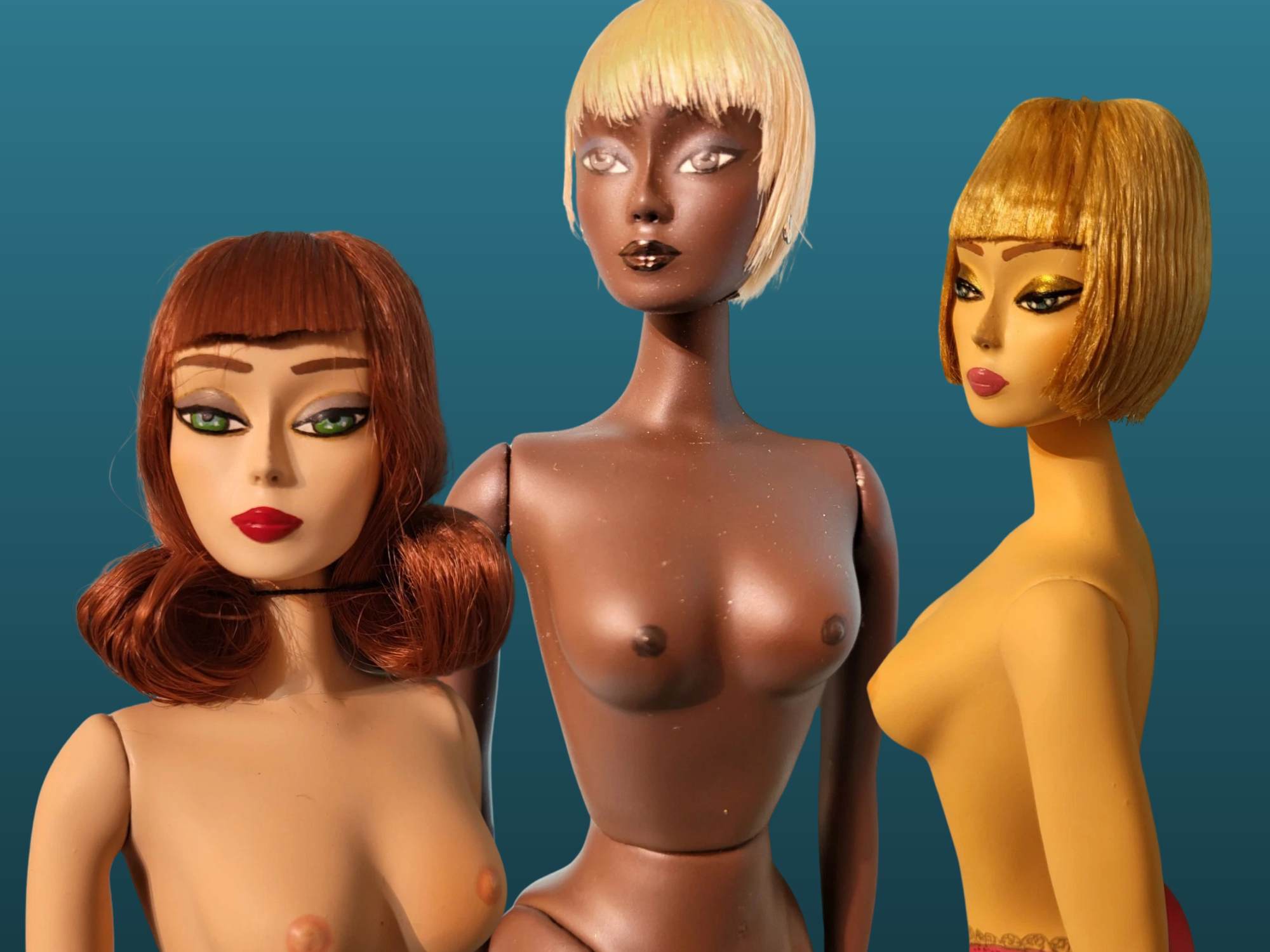
Persias by Darrell Wallace
Persia arrived at a time when Mdvanii dolls had become increasingly difficult to find and expensive to acquire.
Because Mdvanii had been conceived by BillyBoy* and Lala as a "fashion doll as art," collectors were already familiar with the idea that a doll could function as both a collectible and a sculptural object. Persia tapped into that same sensibility while offering a distinct interpretation of the concept.
What made Persia particularly interesting was the way collectors interacted with her. Unlike many mass-produced fashion dolls, Persia was hand-cast and hand-painted in resin, giving her the character of an artisan-made object. Her handmade nature fostered a stronger connection between collector, artist, and doll. Unlike other small-batch indie fashion dolls that strive for perfection, Persia looks distinctly handmade. That quality may have been part of her appeal. Persia was never trying to compete with factory-produced perfection. Tiny variations in casting, painting, and finishing reminded collectors that a human hand was involved in her creation. In a hobby increasingly dominated by precision manufacturing and flawless reproduction, Persia embraced the aesthetic of the handmade object.
As a result, collectors often responded to Persia less as a product and more as an artwork. Her imperfections were not flaws to be corrected but evidence of her origins. Each doll felt slightly individual, carrying traces of the artist's hand in a way that connected her more closely to sculpture than to traditional fashion dolls. For many collectors, that sense of authenticity became an important part of Persia's charm.
Within collecting circles, stories occasionally circulated about tensions between supporters of Mdvanii and Persia, including rumors of legal objections regarding similarities between the dolls. But Persia is unique, and while she overlaps with Mdvanii in some ways—namely as a highly stylized art doll—she is not a direct recast being sold as Mdvanii. There is no deception; Persia is her own doll. Whether fact or folklore, these stories reflected a larger debate about originality, inspiration, and artistic influence. Persia's enduring popularity suggests that many collectors ultimately saw her not as a substitute for Mdvanii, but as a unique doll that developed its own identity and following.
Persia's story did not end with her initial popularity. She developed a devoted following among collectors, appearing regularly in online forums, photo stories, and private collections. Then, much like Mdvanii before her, she gradually began to disappear from the market. Ironically, Persia's scarcity would eventually rival—and in some cases surpass—that of the doll to which she was so often compared. For years, finding a Persia on the secondary market became increasingly difficult, transforming her from a contemporary artist doll into something closer to a legend among collectors.
More recently, Darrell Wallace has begun offering Persia once again, giving a new generation of collectors the opportunity to experience these remarkable creations for themselves.
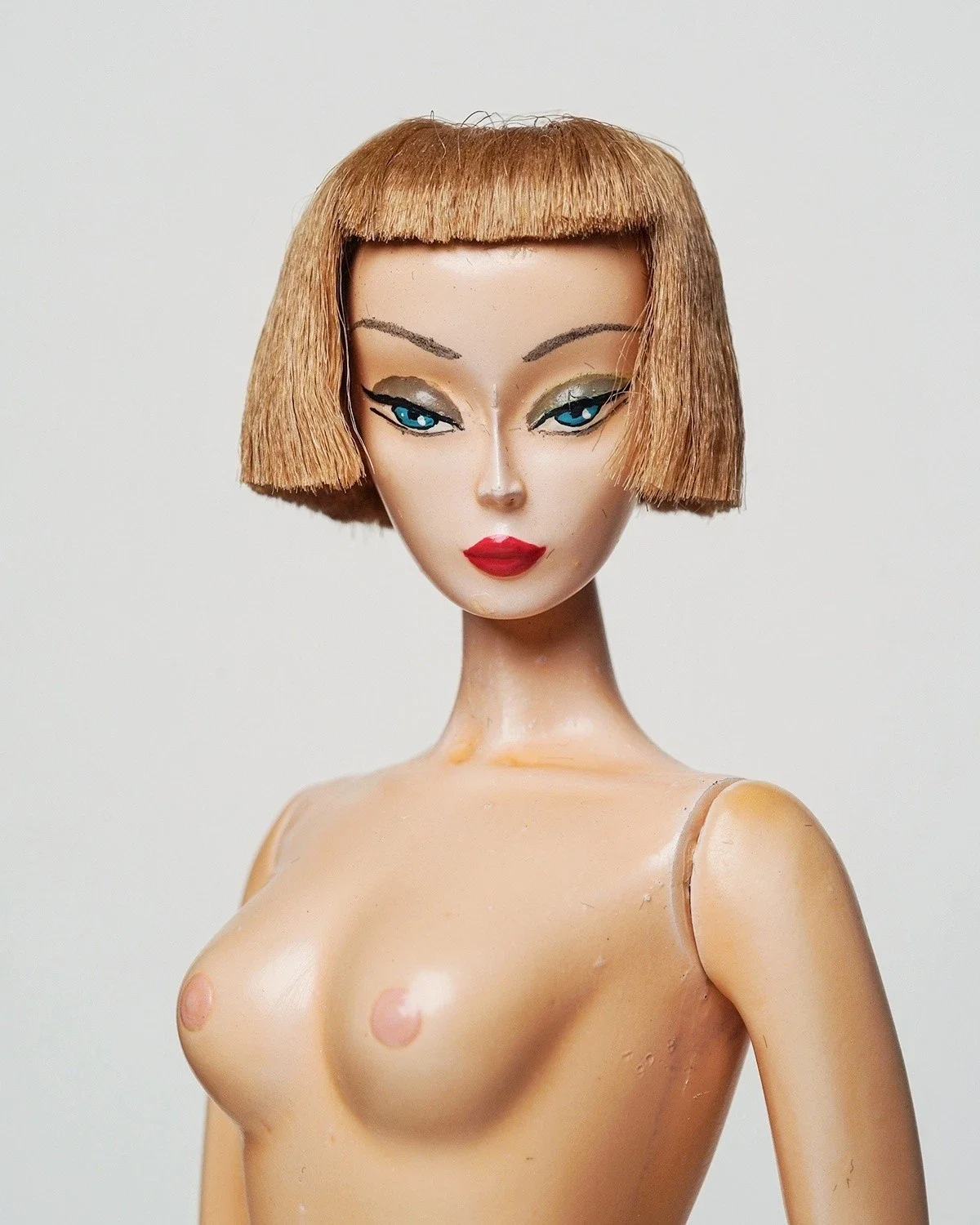
Persia by Darrell Wallace
More than a decade later, Persia occupies an important place in the history of the modern art fashion doll.
There is something fascinating about the way collectors assign value to objects. In art, it is not always the original that captures the imagination. Sometimes it is the work that exists in the shadows of another work—the interpretation, the homage, the object that challenges accepted boundaries. The debates surrounding Persia became part of her appeal. Her relationship to Mdvanii, whether viewed as inspiration, influence, or artistic conversation, gave her a mythology of her own.
Perhaps that is why Persia continues to intrigue collectors today. Not because she replaced Mdvanii, nor because she competed with her, but because she became something rarer: a doll whose story became inseparable from the questions she raised about originality, influence, artistic ownership, and the nature of collecting itself.
In many ways, Persia anticipated the collecting landscape we see today. The rise of resin fashion dolls, boutique artist dolls, and limited-edition independent creations has made the idea of the doll as art far more commonplace than it was when Mdvanii first appeared. Persia helped bridge those worlds, connecting the legacy of an avant-garde fashion doll to a new generation of collectors who were increasingly interested in artistry, individuality, and the visible hand of the maker. Her legacy is not simply that she was compared to Mdvanii, but that she helped establish artist-made fashion dolls as a legitimate and enduring category within the hobby.
For an analysis of Mdvanii vs Persia, please visit The Bold Doll
