Before Barbie: How French Fashion Dolls Invented Modern Desire
© Theriault's Auction House
Long before Barbie became the global symbol of glamour, beauty, and aspirational femininity, another class of fashion dolls had already transformed the cultural meaning of desire itself.
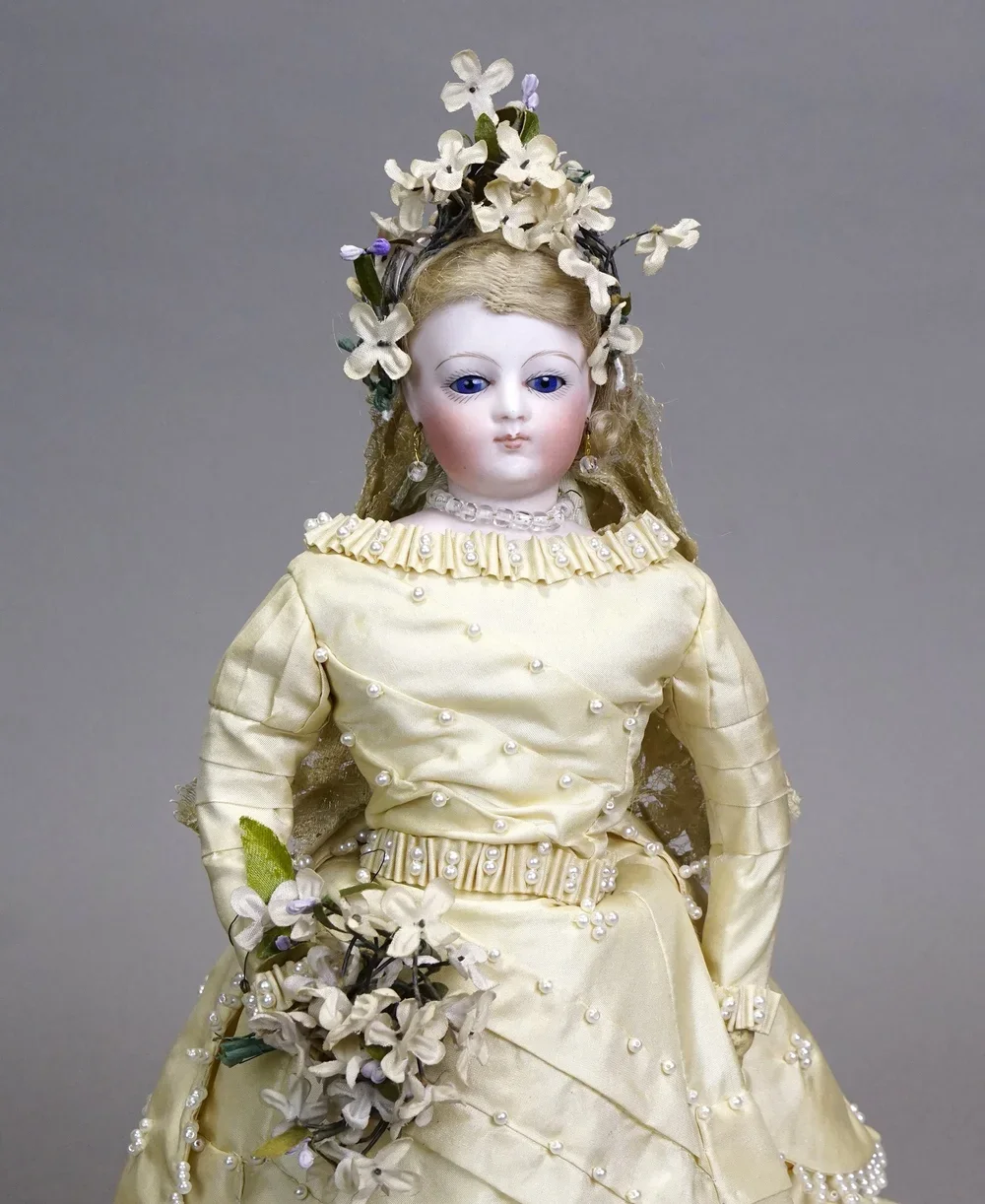
In the salons and luxury boutiques of nineteenth-century Paris, exquisite French fashion dolls dressed by makers such as Bru, Jumeau, and Huret quietly rehearsed many of the fantasies that still shape modern consumer culture today. They were not merely children’s toys. They were miniature luxury objects that taught generations of girls how to see beauty, elegance, femininity, class, and social aspiration.
In many ways, these dolls functioned as the original influencers.
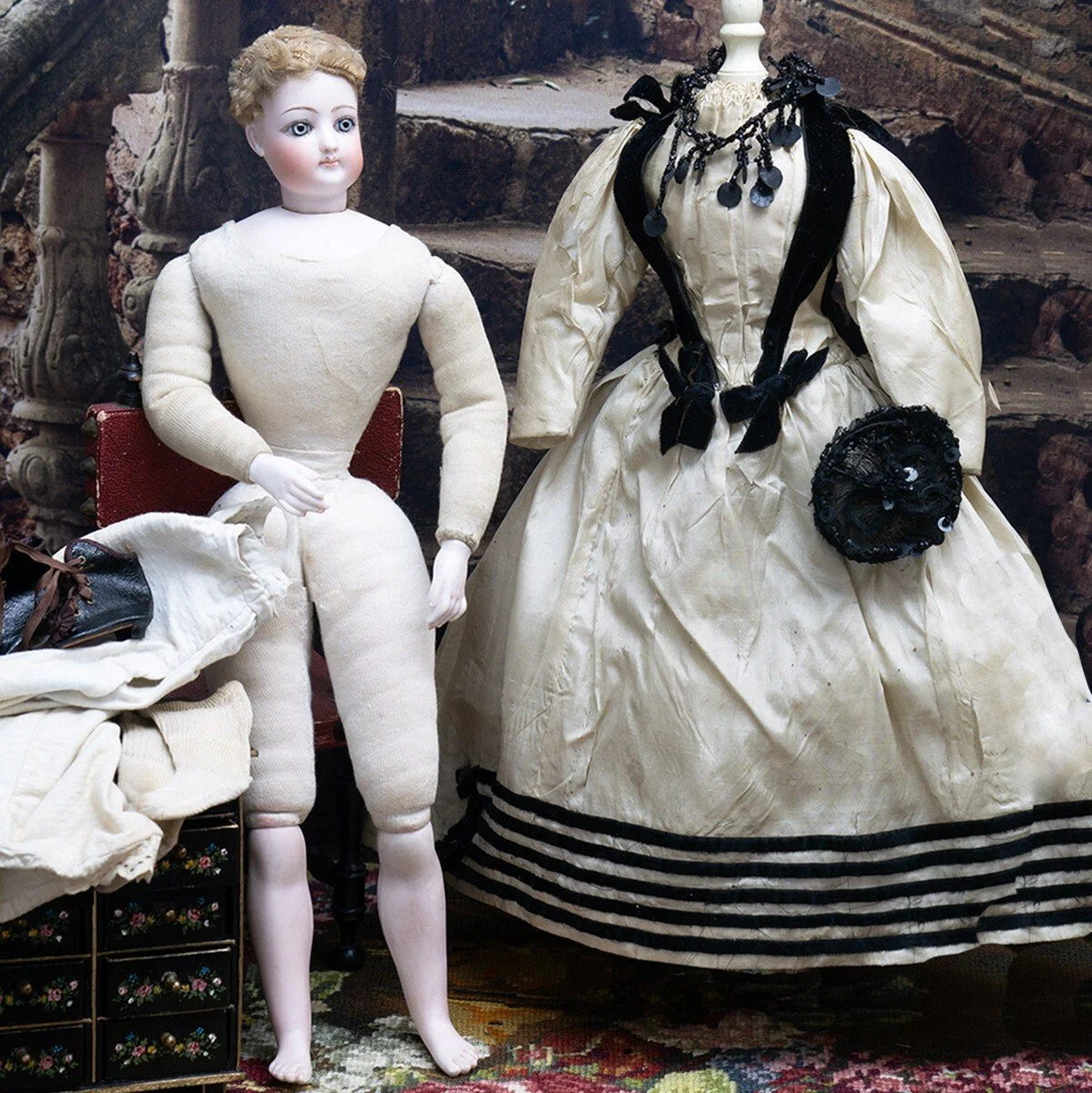
To modern eyes, French fashion dolls can appear almost startling in their sophistication. Unlike the sturdier childlike dolls that later dominated nursery culture, French fashion dolls were designed to embody refinement. Their bisque faces carried delicate expressions and adult-like proportions. Their wardrobes mirrored contemporary Parisian couture with astonishing detail: silk gowns, corsets, kid leather boots, parasols, opera capes, calling dresses, traveling ensembles, and mourning attire. Their trousseaux were expansive. Their bodies were elegant. Their accessories were luxurious. Some dolls arrived with entire wardrobes packed into elaborate miniature trunks resembling those of aristocratic travelers.
These dolls emerged during a period when Paris was becoming the undisputed capital of fashion capitalism. The nineteenth century witnessed enormous changes in industrial production, department store culture, advertising, and class mobility. Luxury consumption increasingly became central to how identity was imagined and performed. Clothing no longer merely protected the body or communicated social status passively. Fashion became aspirational theater. French fashion dolls participated directly in this transformation by introducing children to the rituals of consumer fantasy from an early age.
Importantly, these dolls were rarely intended for poor or even broadly middle-class children. They were luxury commodities purchased by affluent families eager to communicate sophistication, refinement, and cultural literacy. Owning a French fashion doll signaled class position. The dolls themselves became status symbols within elite domestic culture. Much like luxury handbags or designer labels today, they communicated access to a world of taste and privilege.
Yet their cultural significance extended beyond wealth alone. French fashion dolls functioned as educational tools through which girls rehearsed elite femininity. Through dressing, arranging, styling, and displaying dolls, children practiced the codes of upper-class social life. They learned what fabrics mattered. What silhouettes were fashionable. Which accessories signaled elegance. Which forms of posture, presentation, and beauty were socially rewarded. Dolls quietly transformed abstract social ideals into intimate, tactile experiences.
© Theriault's Auction House
This is one reason fashion dolls remain so culturally powerful even now. They transform ideology into play.
The child handling a fashion doll is not simply manipulating an object. She is participating in a miniature world organized around fantasy, beauty, aspiration, and self-construction. The doll becomes a rehearsal space for identity itself.
What French fashion dolls understood long before modern advertising psychology is that desire is learned aesthetically. Humans are taught what to want through repeated exposure to beauty, glamour, luxury, and fantasy. The dolls normalized longing. They taught children how to desire refinement before they were old enough to fully participate in adult consumer culture. In this sense, fashion dolls helped construct modern consumer consciousness itself.
There is also something deeply modern about the emotional relationship these dolls encouraged. French fashion dolls were often displayed, admired, changed seasonally, and discussed socially. Their wardrobes evolved with fashion trends. Their appeal relied upon visual presentation and continual reinvention. This logic feels strikingly familiar today in the age of influencers, curated lifestyles, luxury branding, and social media aesthetics. Contemporary culture still revolves around carefully constructed visual fantasies that invite audiences to imagine themselves transformed through consumption.
The distance between a nineteenth-century Parisian fashion doll and a twenty-first century Instagram influencer is perhaps smaller than it first appears. Both operate through aspirational imagery. Both transform lifestyle into spectacle. Both encourage emotional identification through aesthetics. Both promise self-reinvention through beauty and acquisition.
In many ways, the French fashion doll anticipated the emotional mechanics of influencer culture more than a century before the internet existed. These dolls did not merely display clothing. They staged entire lives. They arrived with traveling trunks, visiting dresses, opera ensembles, morning gowns, calling cards, vanity accessories, and miniature domestic objects that implied sophistication, leisure, and cultivated taste. Their appeal extended far beyond the doll itself. What was being sold was atmosphere — a fantasy of elegant living.
Modern influencer culture functions in remarkably similar ways. Social media personalities rarely sell products directly at first. They sell emotional worlds. Carefully curated interiors, skincare rituals, vacations, wardrobes, routines, apartments, relationships, and aesthetics become part of a larger aspirational narrative into which audiences project themselves. Followers are invited to imagine that beauty, refinement, confidence, romance, or status might become attainable through participation in the same consumer landscape.
French fashion dolls operated through this same emotional logic. Children were encouraged not simply to admire beauty, but to inhabit its rituals imaginatively. Dressing the doll became a rehearsal for social identity. The child learned that femininity could be constructed through surfaces: fabric, posture, accessories, etiquette, presentation, and style. Desire itself became aestheticized.
This lineage becomes even clearer when tracing the evolution from nineteenth-century French fashion dolls to later twentieth-century dolls such as Cissy, Gene Marshall, and eventually Barbie herself. Although Barbie is often treated as a revolutionary break in doll history, she inherited many of the fantasies French fashion dolls had already established generations earlier: fashion as identity, glamour as empowerment, the body as display surface, and consumption as emotional aspiration.
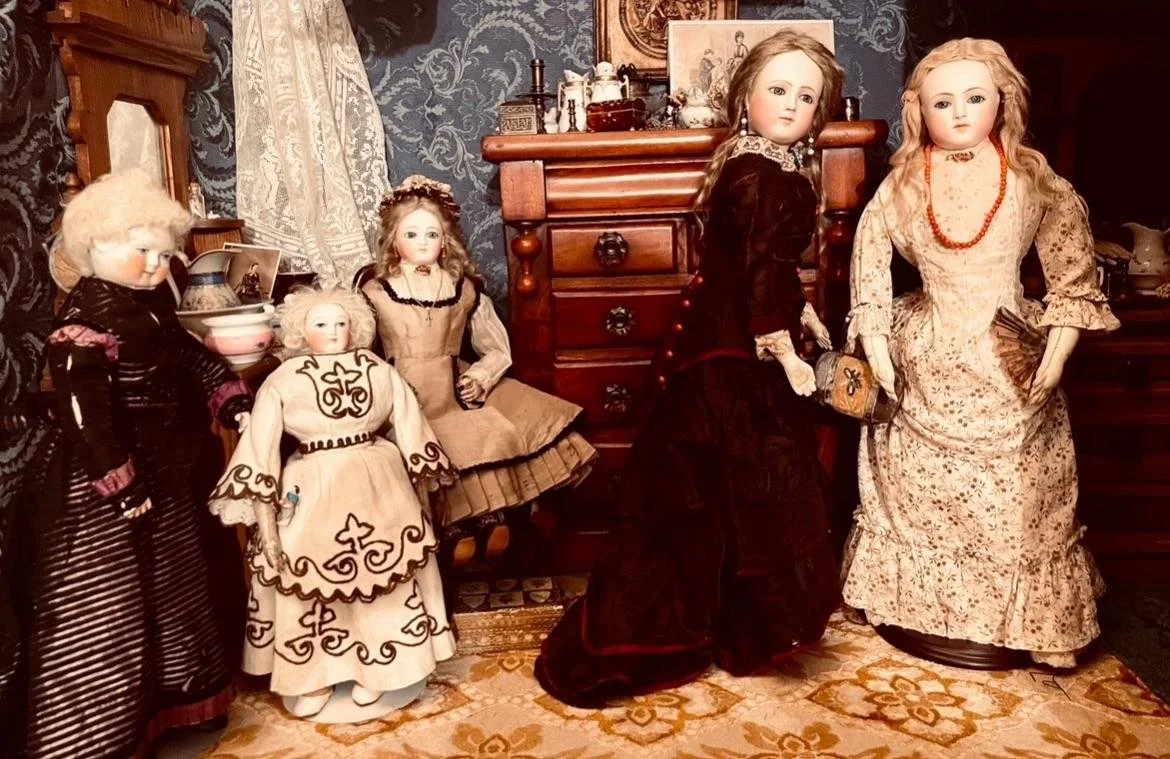
Even Barbie’s famous career versatility reflects older fantasies already embedded within fashion doll culture. French dolls had long embodied aspirational social mobility through costume and presentation. One outfit transformed the doll into a traveler. Another into an aristocrat. Another into a fashionable urban woman attending the theater or opera. Clothing functioned as identity technology. Barbie modernized this framework for postwar American capitalism, translating elite European refinement into accessible mass-market fantasy.
© wikipedia
What changed over time was scale and accessibility. French fashion dolls were luxury commodities intended primarily for wealthy households. Their clothing was handcrafted. Their materials were expensive. Their ownership signaled social position. Barbie democratized fantasies once reserved for elite children. Through industrial manufacturing and mass distribution, she transformed luxury aspiration into something millions of ordinary girls could participate in. A child no longer needed access to Parisian couture culture to rehearse glamour imaginatively. Plastic made aspiration portable.
Yet the emotional architecture was already there.
The nineteenth-century French doll industry also reveals how deeply femininity became intertwined with consumption under modern capitalism. Girls were not simply being taught how to care for dolls. They were being trained into systems of aesthetic discipline and consumer desire. Refinement, elegance, domestic taste, fashionable self-presentation, and bodily appearance became moralized ideals tied to class identity and social mobility. The dolls encoded these values materially. Beauty was no longer merely decorative. It became social currency.
This process mirrored broader cultural changes occurring throughout Europe during the nineteenth century. As department stores expanded and fashion journalism emerged, femininity increasingly became associated with visual self-management. Women were expected not only to be respectable, but visibly refined. Fashion dolls introduced children to this logic early, normalizing the idea that identity itself could be assembled through consumption.
Even now, when collectors encounter antique French fashion dolls, the reaction is often one of awe. Their craftsmanship remains extraordinary, but what truly lingers is the atmosphere surrounding them. They embody an entire cultural imagination built around glamour, sophistication, aspiration, and display. Looking at them feels less like looking at toys and more like glimpsing the emotional origins of modern luxury culture itself.
Their tiny gloves, silk gowns, bonnets, and traveling trunks do not merely represent fashion history. They represent the emergence of a new kind of selfhood — one increasingly shaped through visual performance, consumption, and curated identity.
That may ultimately be their greatest historical significance. French fashion dolls did not simply anticipate Barbie. They anticipated the modern consumer self: the endlessly aspiring self who learns to imagine transformation through aesthetics, acquisition, and display.
Long before social media taught people how to curate their identities visually, French fashion dolls were already teaching the modern world how to want.
