Plastic Closets: Fashion Dolls, Queer Identity, and the Performance of Self
Fashion dolls have always carried more cultural weight than people want to admit. Adults tend to dismiss them as shallow objects tied to beauty standards, consumerism, or little girls’ fantasies, but dolls have long functioned as one of the first places where people learn how gender works — and more importantly, how gender can be manipulated, exaggerated, resisted, or reinvented. For queer people especially, dolls became a surprisingly powerful space for experimentation long before mainstream media offered recognizable queer lives. They were tiny stages where glamour, masculinity, femininity, transformation, and belonging could all be rehearsed safely through play. Queer representation in dolls has rarely been straightforward. Sometimes it appeared intentionally. More often it leaked through aesthetics, styling, camp, and audience interpretation. Queer audiences became highly skilled at reading coded signals in popular culture because direct representation was so limited for so long. Dolls became part of that coded language.
One of the earliest explicit examples was the 1977 doll Gay Bob, often described as the first openly gay doll. Packaged inside a cardboard closet, Gay Bob turned “coming out” into both satire and cultural commentary. He wore denim, cowboy boots, and a pierced ear that reflected the gay male clone aesthetic emerging in the 1970s. But despite the attention he received, Gay Bob remained firmly on the margins, sold more as novelty art and political provocation than as part of mainstream toy culture. He arrived during a moment when gay liberation was still negotiating visibility, legitimacy, and public comfort, and the doll reflected that tension. Queerness was present, but it was still framed as something separate, niche, and slightly transgressive.
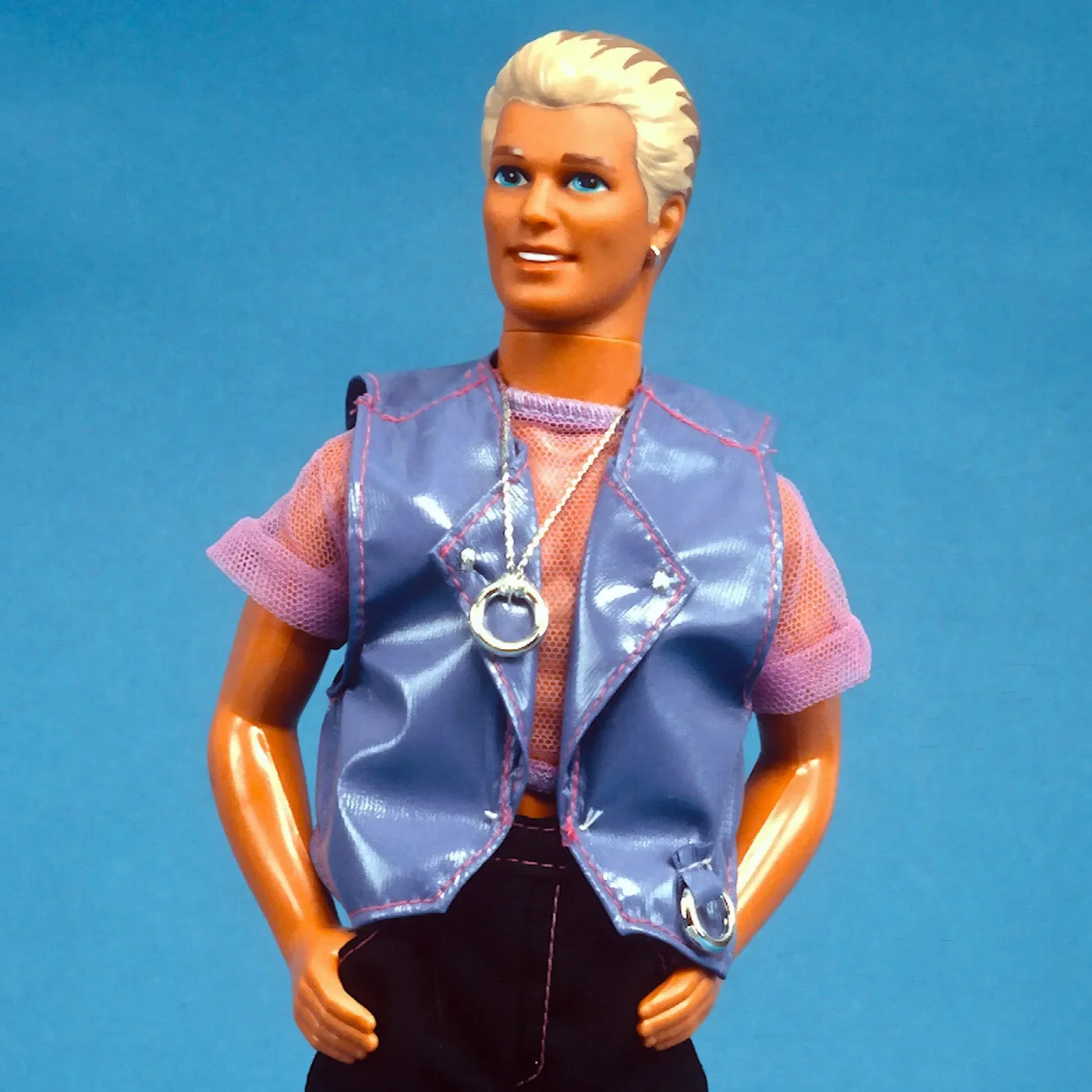
By the late twentieth century, queer readings of dolls became more layered and less intentional. The most famous example is undoubtedly Earring Magic Ken. Released by Mattel in 1993, the doll featured a lavender mesh shirt, leather-inspired vest, a single earring, and a necklace that many gay men immediately recognized as resembling a cock ring. Mattel denied any intentional queer coding, but the doll was almost instantly embraced within gay communities and eventually became one of the most iconic accidental queer artifacts in toy history. Part of what made Earring Magic Ken so culturally significant was not just the doll itself, but the reaction surrounding him. During the AIDS crisis, queer visibility was still heavily stigmatized in American public life. Yet suddenly there was a mass-market doll carrying the visual language of gay nightlife, club culture, and early-1990s queer fashion. Gay men bought the doll in huge numbers, partly because he felt like a covert acknowledgment of their existence inside a corporate fantasy world that rarely included them openly. Even if unintentionally, Mattel had reproduced something recognizable and specific. The company may not have understood the references embedded in the styling, but queer audiences certainly did.
What Earring Magic Ken revealed was how often queer representation enters mainstream culture indirectly, through aesthetics, fashion, gesture, and coded visual language rather than explicit storytelling. Dolls are especially vulnerable to this kind of reinterpretation because they are never fully fixed symbols. Unlike film or television characters, dolls arrive open-ended. Their meaning shifts through styling, play, collecting, and projection. Children and collectors create narratives around them rather than simply consuming prewritten ones.
For many queer people, especially those growing up without visible queer role models, dolls became a safe space to imagine alternative versions of identity and belonging. A doll could become a surrogate body — a place to experiment with glamour, masculinity, femininity, transformation, or desire at a distance that still felt emotionally real. That openness is part of why dolls continue to resonate so deeply in queer culture. They quietly offer the possibility that identity itself might be styled, revised, or reinvented.
Barbie herself became central to this dynamic, despite decades of criticism around impossible beauty standards. Part of Barbie’s enduring queer appeal comes from the fact that she has never had a stable identity. She constantly transforms through fashion, careers, fantasy worlds, hairstyles, and aesthetics. There is something deeply queer about that endless reinvention. Barbie openly presents identity as constructed. She changes constantly while somehow remaining recognizably herself.
That idea resonated strongly with queer kids already learning that gender often felt negotiated rather than natural. Many queer adults describe dolls as one of the first places they encountered the possibility that identity might be performed. Trans women often speak about longing for Barbie while being socially directed toward action figures instead. Some trans men describe cutting dolls’ hair short, swapping clothing, or creating masculine storylines through play. Even small acts of customization became forms of experimentation. Dolls allowed people to rehearse identities they could not yet inhabit publicly. This is part of why dolls provoke such intense cultural anxiety whenever conversations around gender become politically charged. Conservatives often frame dolls as innocent objects corrupted by “politics,” but dolls have always been political because they help teach people what kinds of bodies, relationships, and identities are considered acceptable. The panic surrounding gender-neutral dolls or trans-inclusive toy lines reveals how deeply people understand this, even if they rarely articulate it directly.
By the late 1990s, some dolls became openly queer in ways that would have been nearly impossible a decade earlier. The Billy doll line, created by Totem International, abandoned the subtle coding of Earring Magic Ken entirely. Billy was explicitly gay, campy, hypersexual, and intentionally provocative. The dolls featured exaggerated masculine physiques, leather-inspired aesthetics, and archetypes like Sailor Billy and Cowboy Billy that pulled directly from gay clone culture and queer erotic imagery. Billy also occupied a fascinating place culturally because he arrived at a moment when gay male identity itself was changing. The clone era of the 1970s and 1980s — hypermasculine, mustached, denim-and-leather gay male culture — had become both iconic and contested in the aftermath of AIDS.
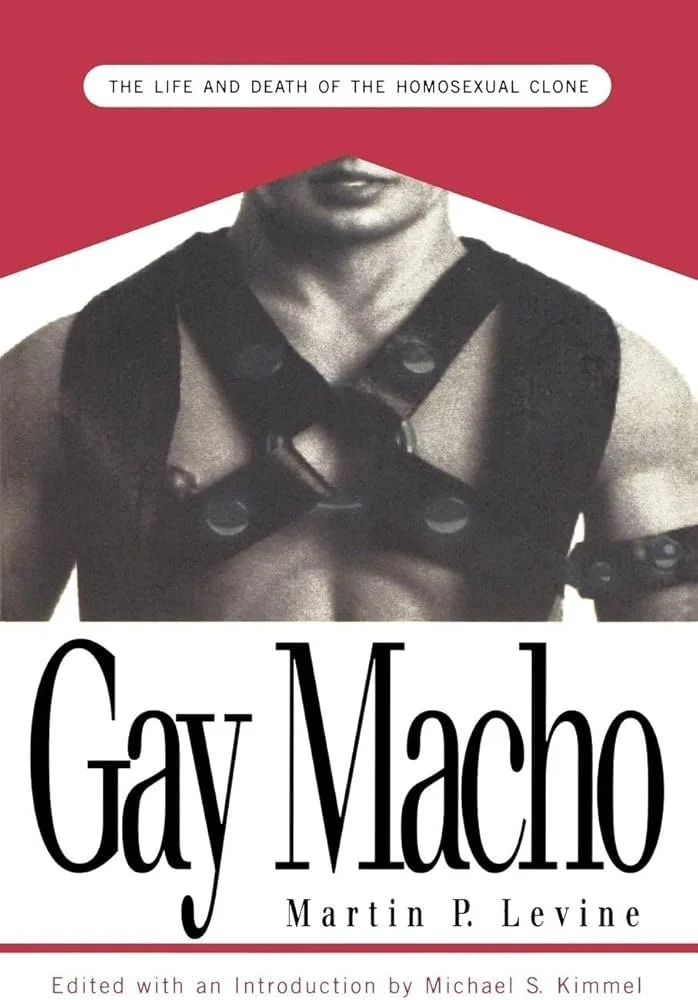
Billy almost functioned as both tribute and parody. One of the most striking examples of this was the use of Billy imagery on the cover of Gay Macho, which explored the rise and decline of clone aesthetics and hypermasculine gay identity. The connection made perfect sense. Billy distilled clone culture into doll form: stylized masculinity, erotic performance, nostalgia, camp, and self-awareness all existing simultaneously.
At the same time, Billy also revealed the limitations within queer representation itself. Like much of mainstream gay male imagery at the time, the dolls centered whiteness, muscularity, and a narrow ideal of desirability. Representation alone does not automatically create inclusivity. Queer culture carries its own hierarchies and exclusions, and dolls reflected those dynamics too.
Meanwhile, other doll lines built queer audiences less through explicit sexuality and more through atmosphere, performance, and transformation. Jem and the Holograms became deeply important to many queer kids because it centered glamour, dual identity, theatricality, and chosen selfhood. The entire premise revolved around Jerrica transforming into Jem through holographic technology, effectively becoming a larger, brighter, more expressive version of herself through performance.
It is difficult not to see why queer audiences connected with that fantasy. Jem treated femininity as powerful, excessive, and transformative rather than passive. Neon makeup, sequins, giant hair, melodrama, and performance were not portrayed as frivolous but empowering. The franchise understood something queer culture has understood for decades: glamour itself can function as resistance. Performance is not necessarily fake. Sometimes performance becomes the mechanism through which people access parts of themselves they otherwise cannot safely express.
That same sensibility later shaped the queer appeal of Bratz, Monster High, and Rainbow High. Bratz pushed femininity into near drag-level exaggeration with oversized lips, nightlife fashion, and attitude-heavy styling. Monster High centered outsiders, bodily difference, and chosen family in ways many queer fans immediately recognized. Rainbow High embraced fashion spectacle so intensely that it often felt adjacent to drag aesthetics and Instagram-era queer self-fashioning.
One of the clearest evolutions in queer doll culture can be seen in the arrival of dolls that no longer merely suggested queerness through coding or camp aesthetics, but openly emerged from drag culture itself. If Earring Magic Ken represented accidental queer visibility, dolls based on drag performers signaled something entirely different: queer identity no longer hidden in subtext, but positioned at the center of the fantasy.
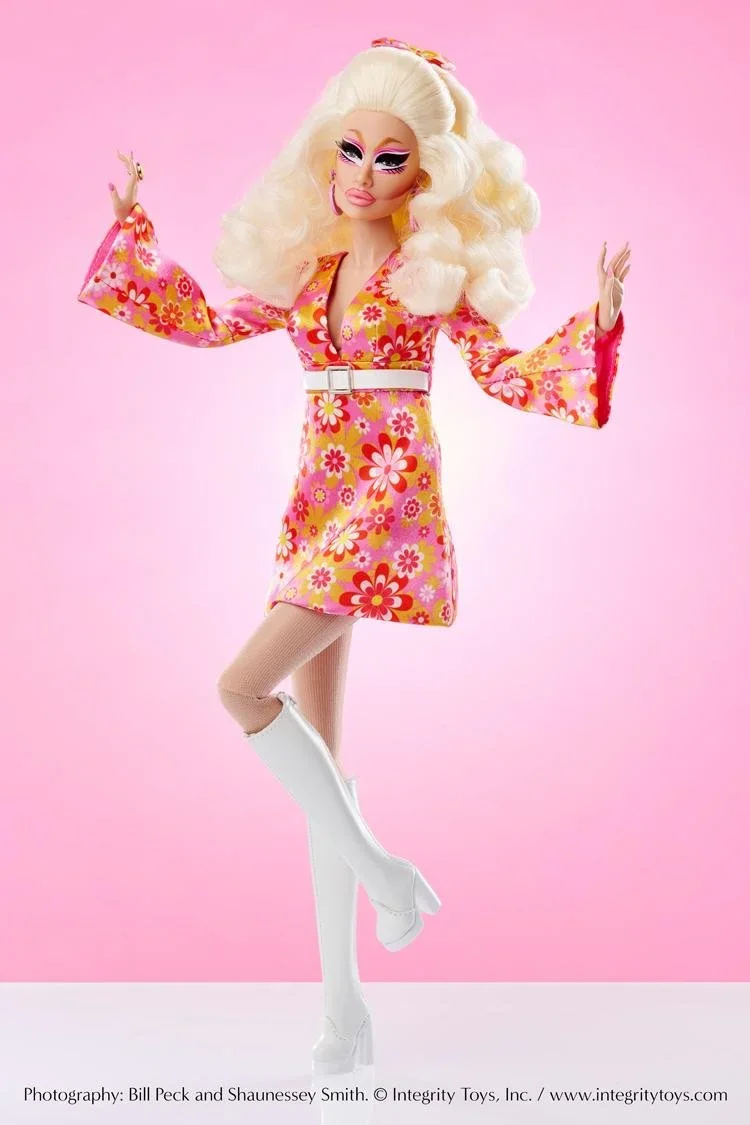
The release of RuPaul doll marked an important shift in how dolls could function culturally. RuPaul had already transformed drag from subcultural nightlife performance into mainstream entertainment through television, fashion, music, and branding. Translating RuPaul into doll form felt almost inevitable because drag and fashion dolls already speak the same visual language: exaggeration, glamour, transformation, styling, illusion, and performance. A RuPaul doll does not simply depict a celebrity. It collapses the distance between drag queen and fashion doll entirely. The doll becomes both tribute and perfect medium. That relationship becomes even more explicit with Trixie Mattel doll by Integrity Toys. Trixie Mattel’s entire artistic identity already plays with the artificiality of Barbie aesthetics — enormous eyes, hyperfeminine makeup, impossible proportions, bright plastic glamour pushed almost to abstraction. Trixie herself often describes her drag as inspired by dolls, mid-century femininity, and exaggerated beauty culture. Turning Trixie into a high-fashion collectible doll creates a strange and fascinating loop where the performer inspired by dolls becomes transformed back into a doll again.
There is also something meaningful about who dolls like RuPaul doll and Trixie Mattel doll are actually made for. Earlier queer-coded dolls like Earring Magic Ken became queer through audience interpretation, through camp reading, projection, and cultural recognition. But drag dolls arrive already knowing who their audience is. They are designed for adult collectors, many of them queer, who immediately understand the references, the humor, the exaggeration, and the fashion lineage being invoked. The emotional relationship shifts when recognition is no longer accidental. These dolls are not hidden signals buried inside mainstream culture; they openly celebrate queer aesthetics, queer fandom, and the pleasure of self-invention.
At the same time, drag dolls continue a much older relationship between queerness, glamour, and survival. Drag has never only been entertainment. Historically, it has functioned as visibility, resistance, aspiration, and sometimes protection — a way of constructing a self in worlds that often denied queer people legitimacy or safety. Fashion dolls participate in that same imaginative structure. They create fantasy spaces where identity feels flexible, stylized, and open to reinvention rather than fixed by social expectation.
In many ways, dolls like RuPaul and Trixie Mattel feel less like a departure from queer doll history and more like the culmination of it. Gay Bob introduced explicit gay identity into doll culture. Earring Magic Ken exposed how unstable masculinity and queer coding already were inside mainstream fashion. The Billy doll line pushed gay male fantasy into camp exaggeration and self-aware performance. Jem and the Holograms transformed glamour and alter ego into liberation. Barbie normalized endless reinvention itself. Drag dolls gather all of those threads together and make visible something dolls have always quietly suggested: gender is constructed through styling, gesture, performance, fantasy, and repetition.
Importantly, queer attachment to dolls has never only been about representation. It is also about collecting itself. For many queer adults, doll collecting becomes a way of reclaiming forms of play, beauty, or self-expression that once felt inaccessible or unsafe. Collections often carry the emotional texture of rebuilding interrupted childhoods. The dolls become less about nostalgia alone and more about permission — permission to desire beauty, artifice, softness, glamour, theatricality, or transformation without shame.
That emotional connection helps explain why dolls continue to matter even as queer visibility becomes more common elsewhere in culture. Dolls operate differently from television or film because they are participatory objects. They do not arrive with fully fixed narratives. They invite reinvention. A doll can be restyled, renamed, recast, transformed, or completely rewritten through play and display. That openness makes dolls uniquely compatible with queer experiences of identity, where selfhood is often shaped through experimentation, revision, and chosen presentation rather than social default.
Fashion dolls ultimately reveal how deeply culture already understands gender as something constructed, even while insisting that it is natural and fixed. Dolls have always taught visual scripts about beauty, desirability, intimacy, status, and identity. Through clothing, styling, posture, makeup, and accessories, they model the idea that the self can be assembled and reshaped. Queer people simply recognized earlier than most that those scripts were flexible — that identity could be revised, exaggerated, softened, performed, or reimagined rather than merely inherited.
And maybe that is part of why dolls continue to unsettle people culturally. A doll can change outfits and become someone else almost instantly. Hair, makeup, gesture, fashion, silhouette — identity shifts through styling. What dolls quietly expose is how much gender already relies on repetition and performance in everyday life. Queer culture did not invent that idea; it simply made visible something fashion dolls have been demonstrating for decades. Beneath the plastic glamour and miniature fantasy worlds sits a surprisingly radical suggestion: identity is never entirely fixed, and perhaps it never was.
References
Butler, J. (1990). Gender trouble: Feminism and the subversion of identity. Routledge.
Forman-Brunell, M. (Ed.). (2021). The Routledge companion to girls’ studies. Routledge.
Levine, M. P. (1998). Gay macho: The life and death of the homosexual clone. New York University Press.
Lord, M. G. (1994). Forever Barbie: The unauthorized biography of a real doll. William Morrow.
Rand, E. J. (1995). Barbie’s queer accessories: Camp and the cultural politics of gender performance. Journal of Popular Culture, 29(2), 27–39.
Robertson, P. (1996). Guilty pleasures: Feminist camp from Mae West to Madonna. Duke University Press.
Sontag, S. (1964). Notes on “Camp.” Partisan Review, 31(4), 515–530.
Steinberg, S., & Kincheloe, J. (1997). Kinderculture: The corporate construction of childhood. Westview Press.
Troy, G. (2000). Barbie’s world: The American dream and the rise of the Mattel empire. Free Press.
