Lady Luminous: The Japanese Fashion Doll That Arrived Before the Collector Market
When Takara introduced Lady Luminous in 1988, they were releasing a fashion doll into a world that did not quite know what to do with her.
Looking back now, it is tempting to place her neatly within the history of collector dolls, to draw a straight line from Lady Luminous to Gene Marshall, Tyler Wentworth, Fashion Royalty, and the countless luxury fashion dolls that followed. Yet part of what makes Lady Luminous so fascinating is that she appeared before that market had fully taken shape. She arrived during the final years of Japan's economic bubble, at a moment when luxury consumption, designer fashion, and aspirational lifestyles occupied an increasingly visible place in everyday life. Takara already understood how to make successful dolls. Licca-chan had become a cultural institution. Jenny had emerged only two years earlier. Both were designed to live comfortably within the established world of fashion dolls. Lady Luminous felt as though she belonged to a different conversation entirely.
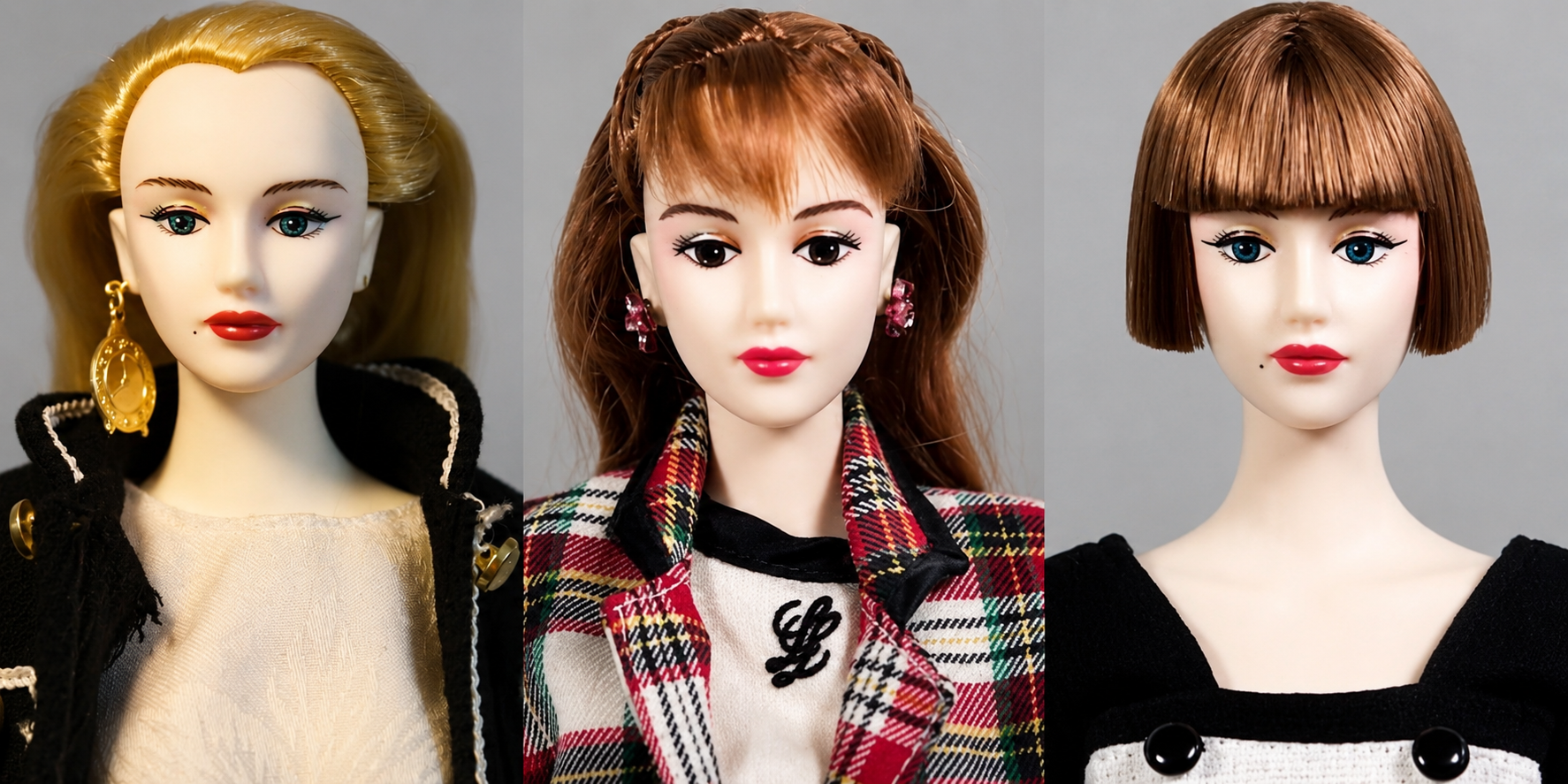
Lady Luminous dolls, authors’ collection
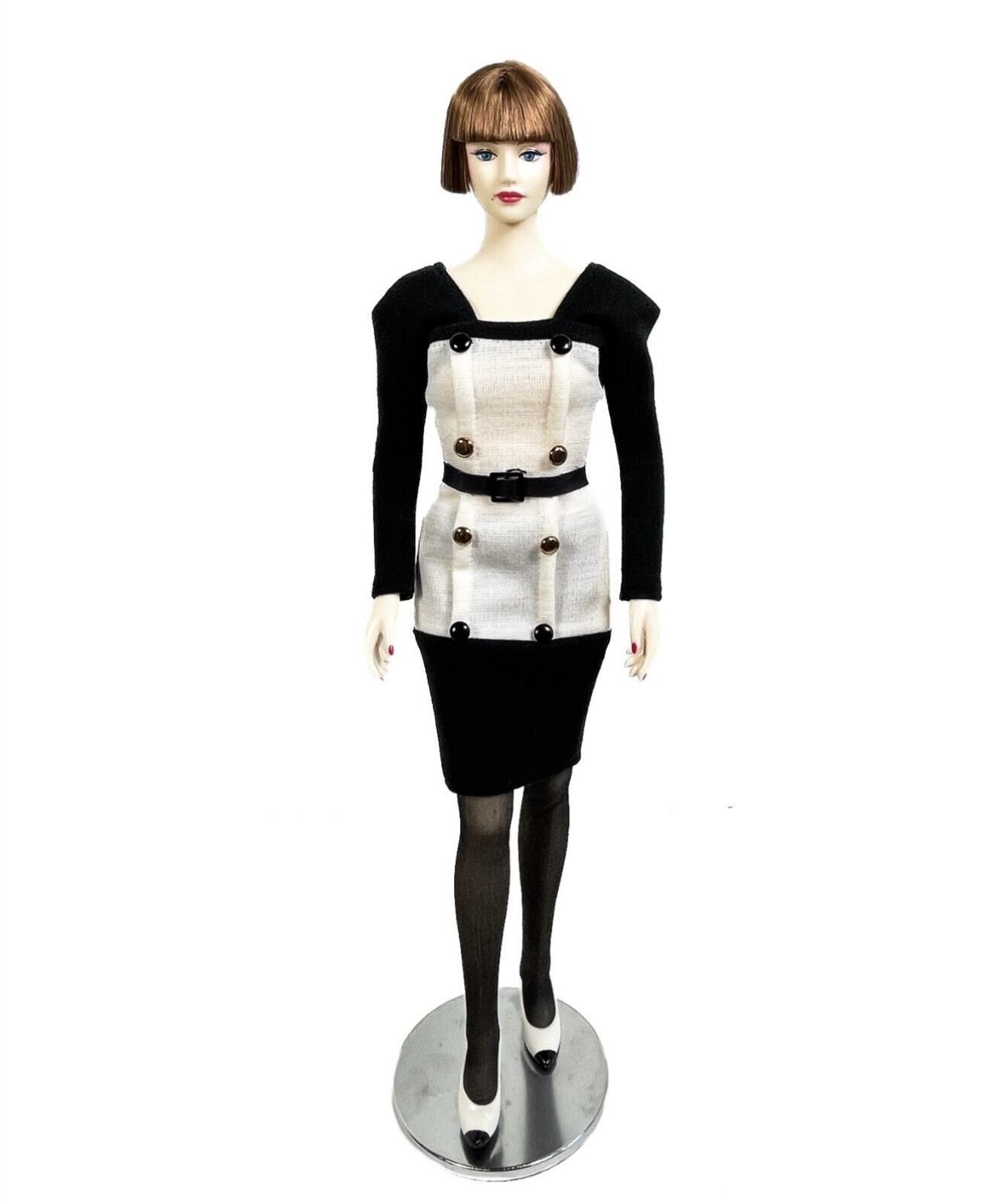
The doll herself was striking. Standing approximately seventeen inches tall, she possessed proportions that seemed almost intentionally at odds with the visual language of most fashion dolls. Takara reportedly designed her around the proportions of a fashion model rather than the conventions of toy design. Her head was roughly one-sixth the size of her body, creating a silhouette closer to that of a runway model than a traditional doll. In scale, she represented a woman approximately five feet eight inches tall with measurements equivalent to a thirty-four-inch bust, twenty-one-inch waist, and thirty-four-inch hips. Even today, photographs of Lady Luminous can be surprising because she does not immediately read as a doll from the late 1980s. She looks contemporary. She looks like a prototype for something that had not yet happened. Her body was not particularly articulated, and that limitation reveals something important about the philosophy behind her design. Movement was never the point. She was not intended to sit on a shelf of toys waiting to be played with. She was intended to wear clothing beautifully. Her permanent stance, elongated proportions, and carefully balanced posture all directed attention toward the garments she wore.
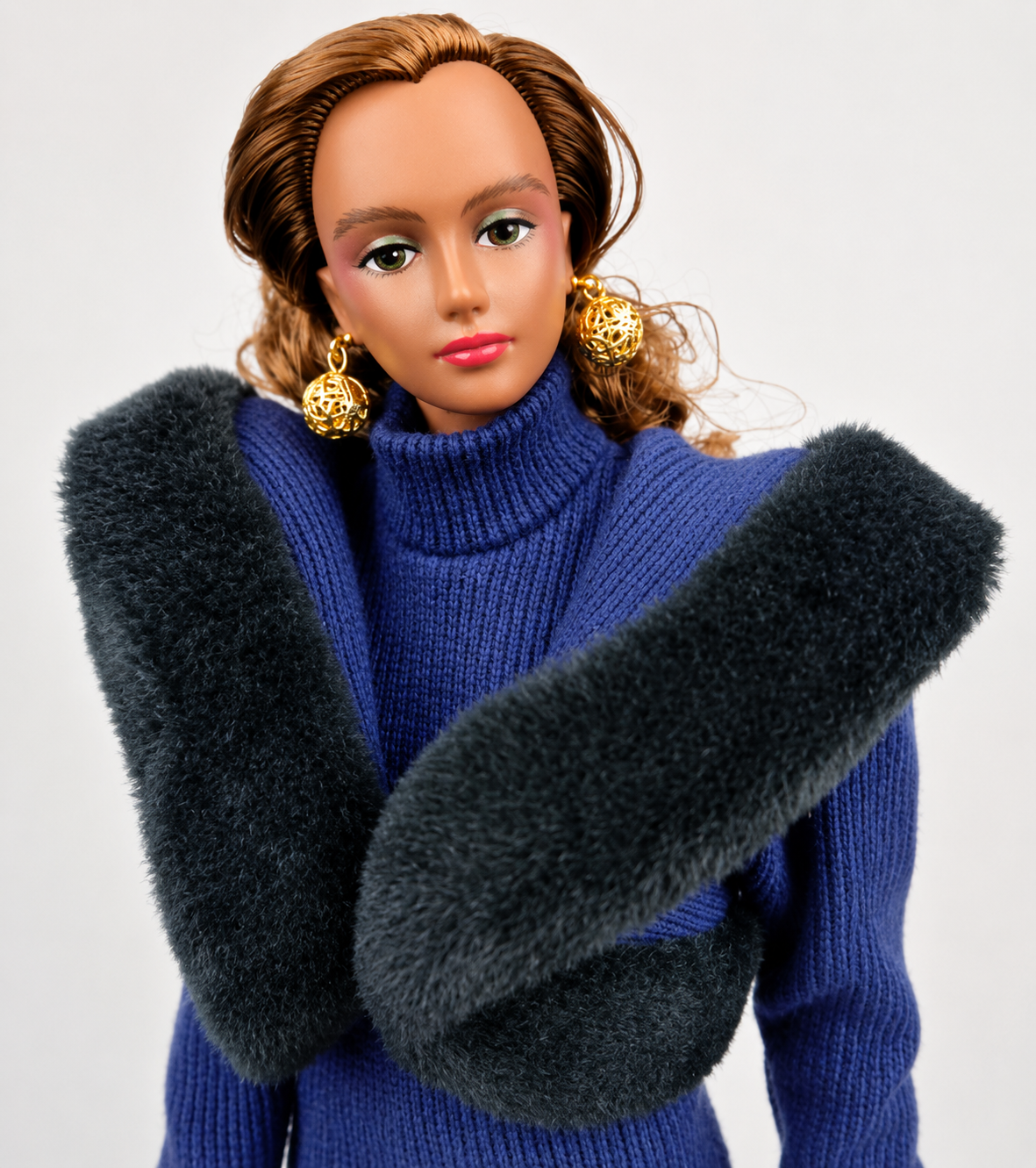
Lady Luminous doll, authors’ collection
That emphasis on fashion becomes even more interesting when placed against the cultural landscape of the late 1980s. This was the era of power dressing, of broad shoulders and sharply tailored jackets, of designer labels becoming increasingly visible markers of identity and status.
Fashion was not merely clothing. It was performance. It was aspiration. It was a way of communicating who you were and who you hoped to become. Lady Luminous embodied that sensibility. Her wardrobe reflected contemporary fashion rather than fantasy. Power suits, dramatic shoulder pads, oversized jewelry, evening wear, bridal fashions, lingerie, and sophisticated separates transformed the doll into something resembling a miniature fashion editorial. Many garments were produced with a level of tailoring and fabric quality that remains impressive decades later. The doll functioned less as a character than as a model. In many ways, she occupied the same role as the women appearing in the pages of Vogue, Harper's Bazaar, and Elle. The clothes told the story. The body existed to support the clothes.
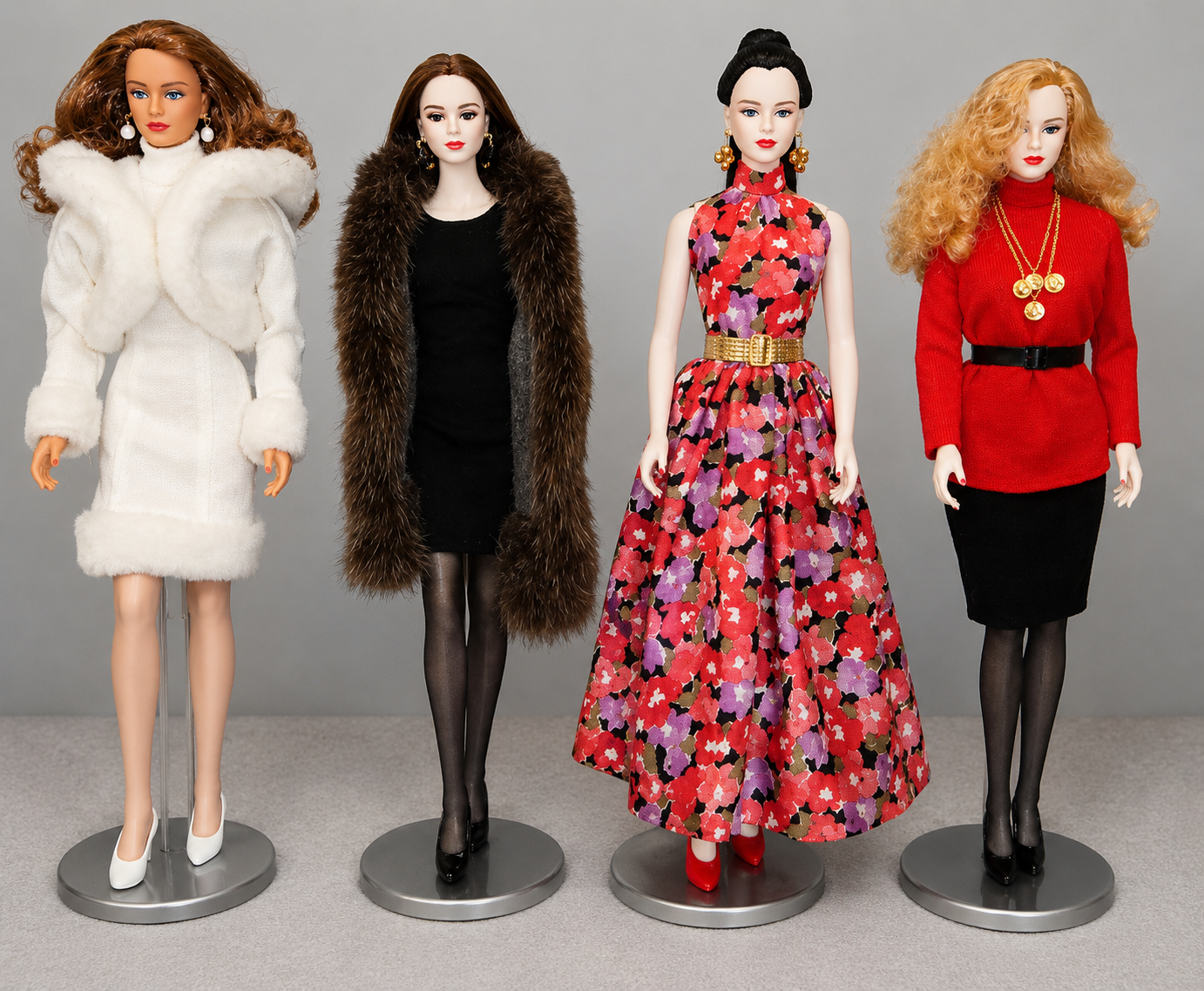
Lady Luminous dolls, authors’ collection
The decision to limit articulation suddenly makes more sense when viewed through that lens. Lady Luminous offered only basic movement through the neck and shoulders, while the hips and legs remained fixed in a permanent model stance. One collector famously described her as a clothes horse, and while the phrase sounds dismissive at first, it captures exactly what Takara seemed to understand. The doll was never designed around action or play. She was designed around presentation. Every design choice reinforced the visual line of the garment. A fitted jacket sat properly on the shoulders. A skirt maintained its shape. A bridal gown draped cleanly. Long before fashion dolls became luxury collectibles displayed behind glass, Lady Luminous was already functioning as a miniature mannequin for adult appreciation.
What fascinates me most is that Lady Luminous appeared at a moment when the relationship between people and dolls was quietly beginning to change. Throughout much of the twentieth century, fashion dolls occupied a relatively clear cultural category. They were toys, even when adults collected them. By the late 1980s, collecting itself was becoming increasingly visible as a social practice. Objects once dismissed as children's playthings were being reconsidered as artifacts, investments, archives of memory, and expressions of personal taste. Action figures, comic books, trading cards, and dolls were all beginning to move across the boundary separating toy culture from collector culture. Lady Luminous seems to emerge precisely at that crossing point. She feels less concerned with childhood fantasy and more concerned with aesthetic appreciation. Even the way the dolls were presented reflected that sensibility. Packaged in understated black boxes embossed with gold, often with surprisingly little visible Takara branding, they projected the quiet confidence of a luxury object rather than a mass-market toy.
Takara's approach to the face sculpt reflected a similar discipline. Rather than producing endless new molds, the company relied largely on a single sculpt and created variation through makeup, hairstyles, rooted Saran hair, and different skin toes.
The line included very pale, honey-toned, and darker African American complexions, allowing the same face to inhabit multiple identities. A businesswoman, a bride, a high-fashion model, or an evening glamour figure could all emerge from the same underlying structure. The consistency created cohesion while the styling created individuality. Looking back, it feels remarkably modern, particularly at a time when diversity within fashion doll lines was far less common than it is today.
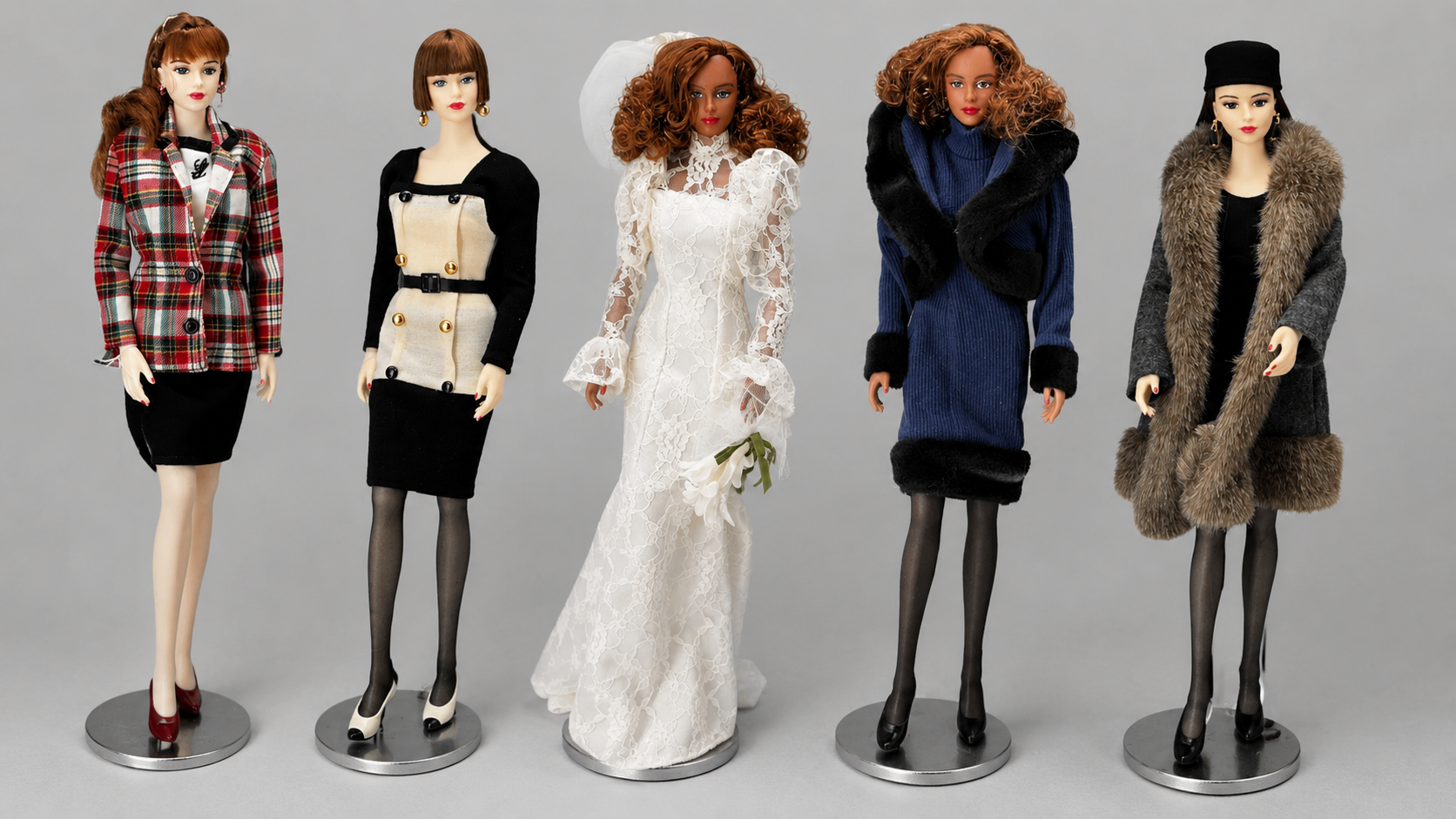
Lady Luminous dolls, authors’ collection
Lady Luminous was never intended to remain exclusively a Japanese phenomenon.
Through dealer Murat Caviale, the dolls gradually found their way into collections throughout Europe and North America, often at prices that placed them well outside the range of ordinary play dolls. Contemporary accounts suggest that Takara hesitated to pursue broader international distribution because they were uncertain that Western consumers would embrace a fashion doll positioned at such a premium level. In retrospect, that hesitation reveals how unusual the concept really was. The collector infrastructure that exists today—online communities, conventions, specialty retailers, social media groups, and an established market for luxury dolls—had not yet fully emerged. Yet Lady Luminous was already being presented as something closer to a fashion object than a toy. Some releases appeared under the name Deux-L, adding another layer to the line's somewhat elusive identity, but whether collectors encountered her as Lady Luminous or Deux-L, the attraction seems to have been remarkably consistent. She offered a kind of refinement that was difficult to find elsewhere, a doll whose design assumed that the viewer would slow down long enough to notice proportion, tailoring, fabric, and presentation.
Perhaps that is why Lady Luminous feels so difficult to place historically. She clearly belongs to the late 1980s. The fashions, the silhouettes, and the cultural atmosphere that shaped her are unmistakably products of that moment. At the same time, she seems to be operating according to a set of assumptions that would become far more familiar decades later. Realistic proportions, premium construction, luxury packaging, limited distribution, adult consumers, and an emphasis on display rather than play have become defining characteristics of the modern collector doll market. Lady Luminous did not invent those ideas, but she gathered them together with unusual clarity. Looking at her now, what stands out is not simply that she was ahead of her time. It is that she emerged during a period when the boundary between toy and collectible was beginning to shift, quietly occupying a space that the broader doll industry would spend the next several decades moving toward.
